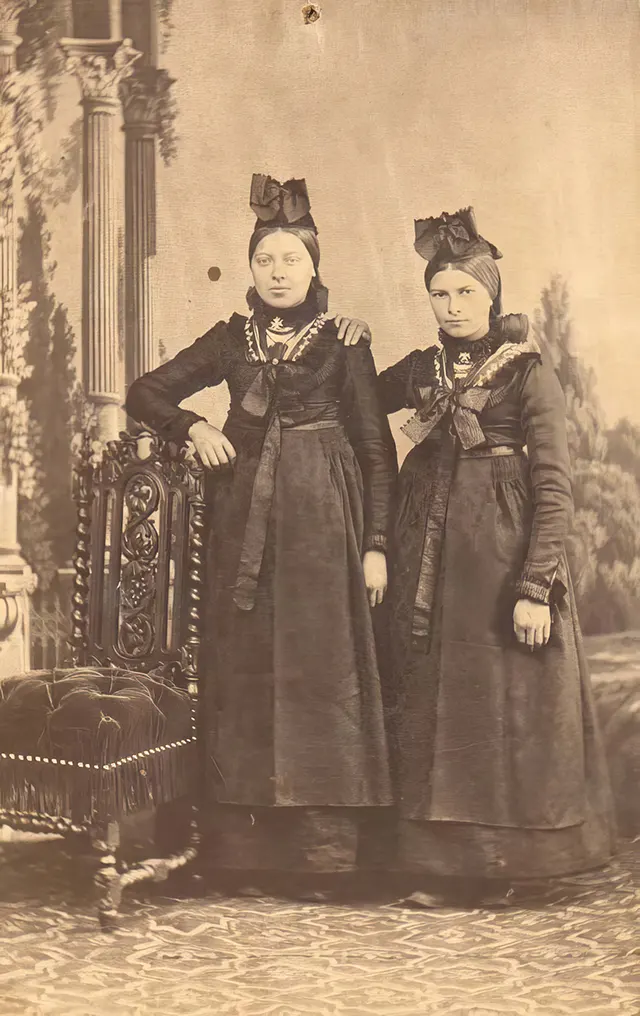
Two young women pose in a studio setting, their expressions calm and assured as they stand beside an ornate chair and a painted backdrop with a classical column. The composition feels carefully arranged: one rests an arm on the chair while the other places a hand on her companion’s shoulder, creating a quiet sense of solidarity. Sepia tones soften the scene, yet the crisp lines of their clothing keep the focus on tradition and presence.
At the center of the portrait is the Schlupfkapp, the distinctive Alsatian headdress rising above neatly arranged hair and framing the face with sculptural drama. Paired with dark, high-necked dresses, fitted bodices, and patterned neck scarves, the ensemble reads as more than everyday wear—an intentional statement of regional identity and cultural heritage. Small details in the textiles and trimming suggest care, pride, and the visual language of local fashion passed through generations.
Rather than relying on a specific place or date, the photograph speaks through symbols: costume, posture, and the studio’s theatrical elegance combine to highlight Alsace’s enduring cultural vocabulary. The Schlupfkapp stands out as a recognizable emblem in fashion history, linking personal identity to community memory. For readers searching Alsatian traditional dress, European folk costume, or the history of regional headwear, this image offers a compelling window into how clothing can carry heritage across time.