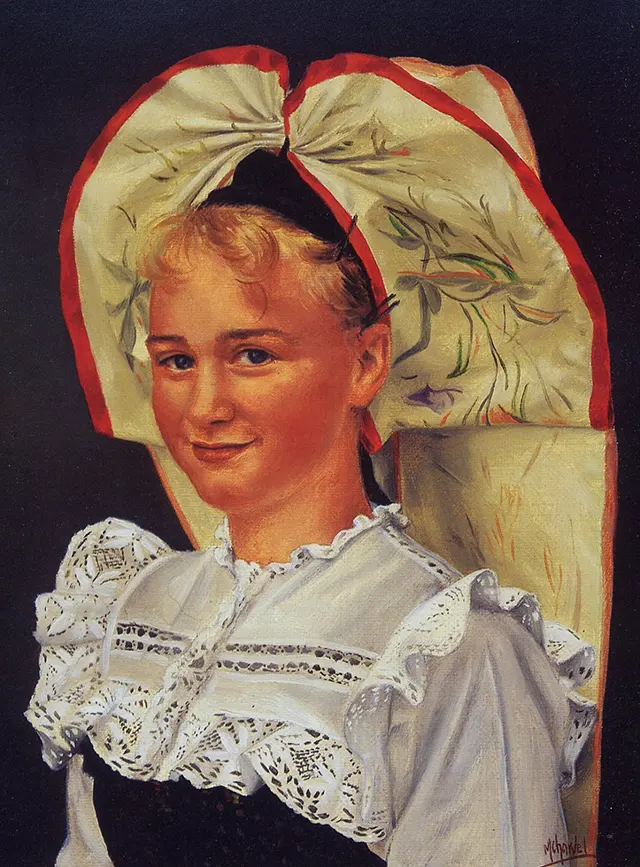
Against a dark, velvety backdrop, a young Alsatian girl turns slightly toward the viewer, her expression poised between shyness and pride. The focal point is the Schlupfkapp—an oversized, heart-like bow of pale fabric edged in red and lightly decorated with leafy motifs—rising above her head like a ceremonial banner. Its soft folds frame her face and brighten the portrait, making regional dress the unmistakable subject.
Her white blouse is trimmed with eyelet lace and ruffles, the delicate needlework catching the light and emphasizing the care invested in everyday finery. A darker bodice beneath sets off the crisp whites, while the careful arrangement of sleeves, collar, and ties suggests clothing intended not only for comfort but for display at festivals, church days, or formal visits. The combination of textile textures—smooth cap fabric, airy lace, and sturdy bodice—speaks to a fashion tradition built as much on craft as on aesthetics.
In Alsace, the Schlupfkapp has long carried meanings that go beyond adornment, functioning as a visual shorthand for local identity and cultural heritage in a region shaped by shifting borders and blended influences. Portraits like this one helped preserve the look of folk costume, turning household attire into a symbol recognized in art, postcards, and memory. For readers interested in Alsatian fashion, traditional headwear, and European folk dress, the image offers a vivid reminder of how clothing can declare belonging as clearly as any flag.