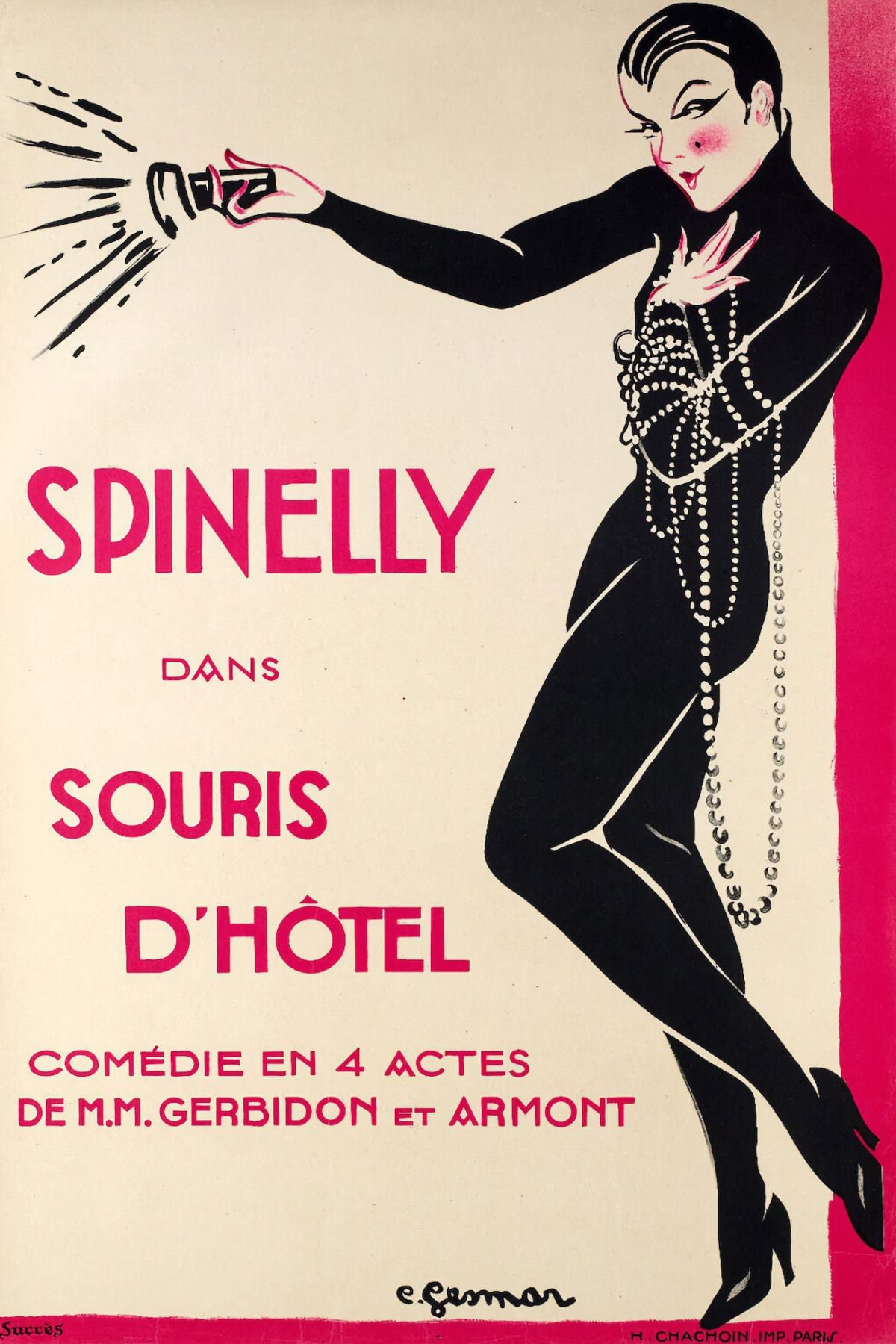
A flash of hot pink lettering and a sleek black silhouette make an instant promise of nightlife, wit, and theatrical mischief in Charles Gesmar’s 1922 music hall poster for Spinelly. The figure—drawn with sharp, modern lines—leans into the empty space with a knowing smile, cigarette holder extended as if addressing the audience directly. Behind the poised stance, long strands of pearls and a feathered accent add cabaret glamour while the crisp cream background keeps every gesture legible from the street.
Typography does much of the storytelling here: “SPINELLY” dominates in bold capitals, followed by the French text “dans Souris d’Hôtel,” and “comédie en 4 actes,” anchoring the piece in the world of stage entertainment and popular playbills. Gesmar’s confident economy—minimal shading, dramatic contours, and carefully placed color—evokes the Art Deco era’s love of speed, style, and graphic punch. Even the small burst of marks at the left suggests spotlight, sound, or the crackle of performance energy, turning a static poster into a moment mid-act.
Collectors and design historians value works like this as more than advertisement; they are snapshots of how modern celebrity, fashion, and music hall culture were packaged for mass attention. The poster’s theatrical pose, exaggerated makeup, and streamlined costume hint at the era’s playful boundary-pushing onstage, where persona could be as important as plot. For anyone searching for Charles Gesmar poster art, 1922 French music hall graphics, or Spinelly ephemera, this print remains a striking example of how a single image could sell an evening’s entertainment with irresistible style.