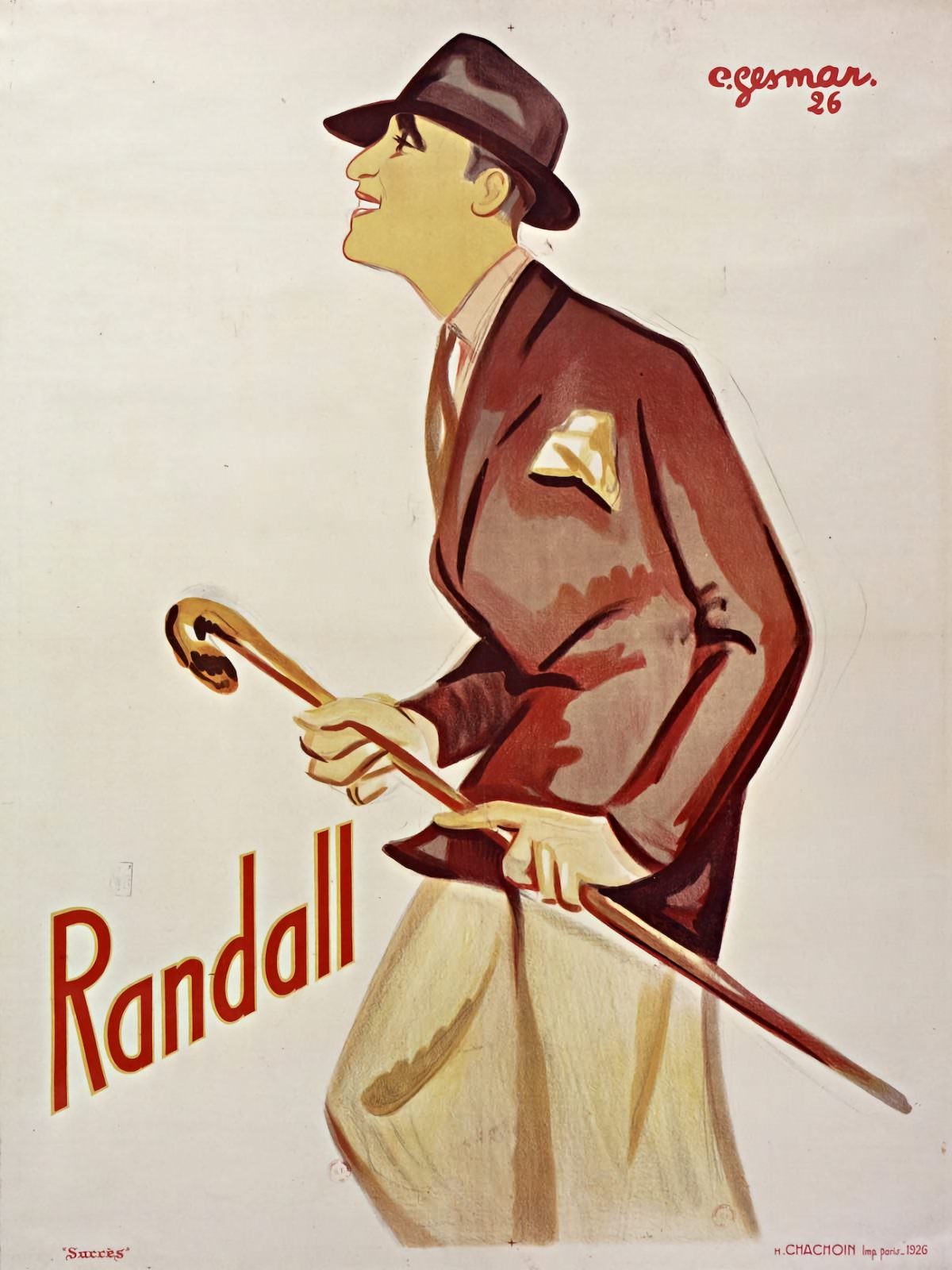
A jaunty figure in a tilted hat leans forward mid-stride, cane in hand, as if caught at the exact moment the night begins. Rendered in warm browns and creams against a pale ground, the poster’s stylish silhouette and crisp profile speak to the streamlined glamour associated with the mid-1920s. The bold “Randall” lettering anchors the composition, turning a single character study into an instantly readable advertisement.
Charles Gesmar’s signature appears at the top, with “26” beside it, hinting at the poster’s era and the artist’s confident authorship. The clothing details—sharp lapels, a neatly folded pocket square, and wide, light-toned trousers—project a carefully curated elegance, while the cane adds movement and a touch of theatrical flair. Even without a detailed setting, the pose and costume suggest nightlife, performance, or fashionable leisure, all distilled into a clean, poster-ready design.
For collectors and design historians, the Randall poster offers a vivid example of early 20th-century commercial art: minimal background, maximum personality, and typography that sells as much as it decorates. Its restrained palette and expressive linework make it particularly striking in digital galleries or WordPress posts focused on vintage posters, Art Deco illustration, and classic French graphic design. Whether you’re researching Gesmar or simply browsing iconic advertising imagery, this piece rewards a close look at how character and branding were fused into one memorable scene.