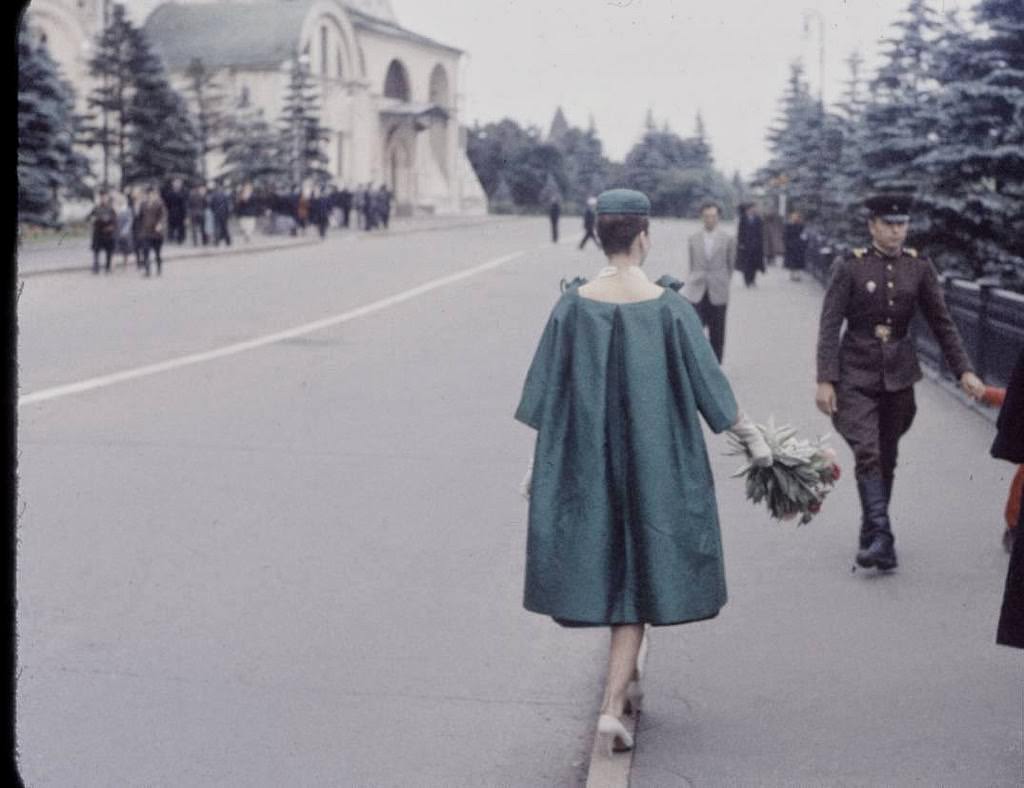
A lone figure in a sculptural, deep-toned coat strides down a broad Moscow roadway, bouquet in hand, as passersby and a uniformed officer move through the frame with matter-of-fact calm. The contrast is immediate: couture poise against the everyday rhythms of a Soviet street, where architecture and disciplined space feel as formal as any runway. Even from behind, the silhouette reads like a statement—clean lines, controlled volume, and a deliberate elegance that interrupts the usual visual language of the city.
1959 sits in the title like a hinge year, and the photograph leans into that sense of cultural friction and curiosity. Western fashion didn’t simply arrive as clothing; it arrived as an idea—about individuality, luxury, and modern femininity—tested in public view. The onlookers in the distance, the open avenue, and the quiet confidence of the walker suggest a moment when style became spectacle, and a simple walk turned into a small diplomatic event.
For readers drawn to fashion history, Cold War culture, and the surprising places where haute couture left its mark, this scene offers a vivid entry point. It hints at how Dior’s aesthetics could feel both alien and irresistible in the Soviet imagination, reshaping conversations about taste without saying a word. As a piece of visual storytelling, it captures the charge of Moscow’s 1959 fashion shock—where a single silhouette could make an entire street look newly observed.