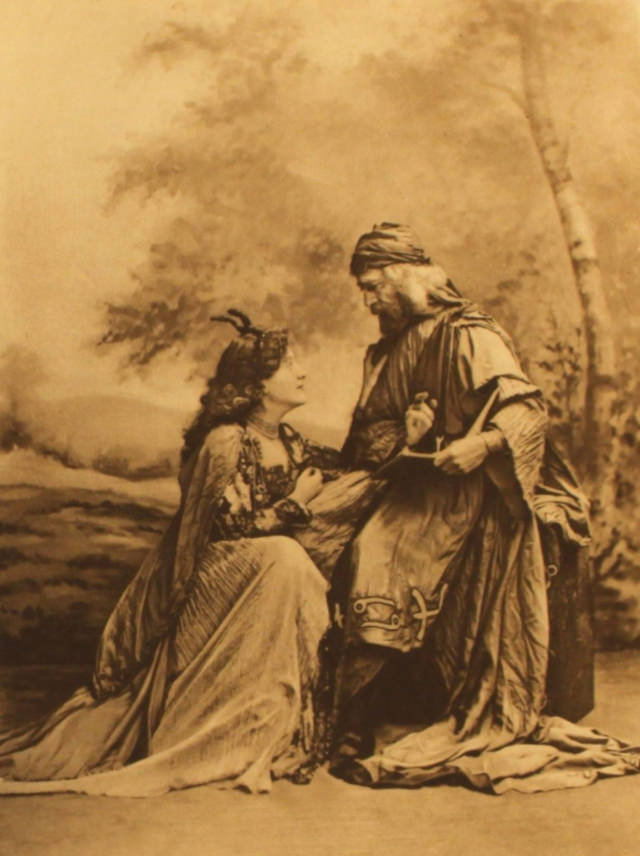
Draped in theatrical medieval finery, Mr and Mrs Hall Walker pose as Merlin and Vivian, the Lady of the Lake, turning Arthurian romance into living tableau. The bearded magician stands in layered robes and a wrapped head covering, while Vivian, seated and attentive, wears a flowing gown with ornate detailing and a distinctive headpiece that reads as both courtly and otherworldly. Their clasped hands and close, conversational posture suggest the moment of enchantment hinted at in many versions of the legend.
Soft studio lighting and a painted landscape backdrop—trees rising at the edge, open country rolling away—create an imagined Britain of storybooks rather than a literal place. The sepia tones lend the scene a dreamlike hush, emphasizing texture: heavy fabric folds, decorative trim, and the careful arrangement of sleeves and trains. It’s the kind of composition that bridges costume photography and staged portraiture, meant to be admired for both craftsmanship and narrative.
Behind the romance lies the social spectacle of the 1897 Devonshire House Ball, where elite guests competed in historical and literary dress with an eye for authenticity and extravagance. Choosing Merlin and the Lady of the Lake was more than a clever theme; it echoed the era’s fascination with medieval revival, chivalric myth, and the prestige of Britain’s legendary past. For modern viewers searching the Devonshire House Ball costumes, this portrait remains a striking example of late-Victorian fashion culture—part pageant, part performance, and entirely deliberate in its storytelling.