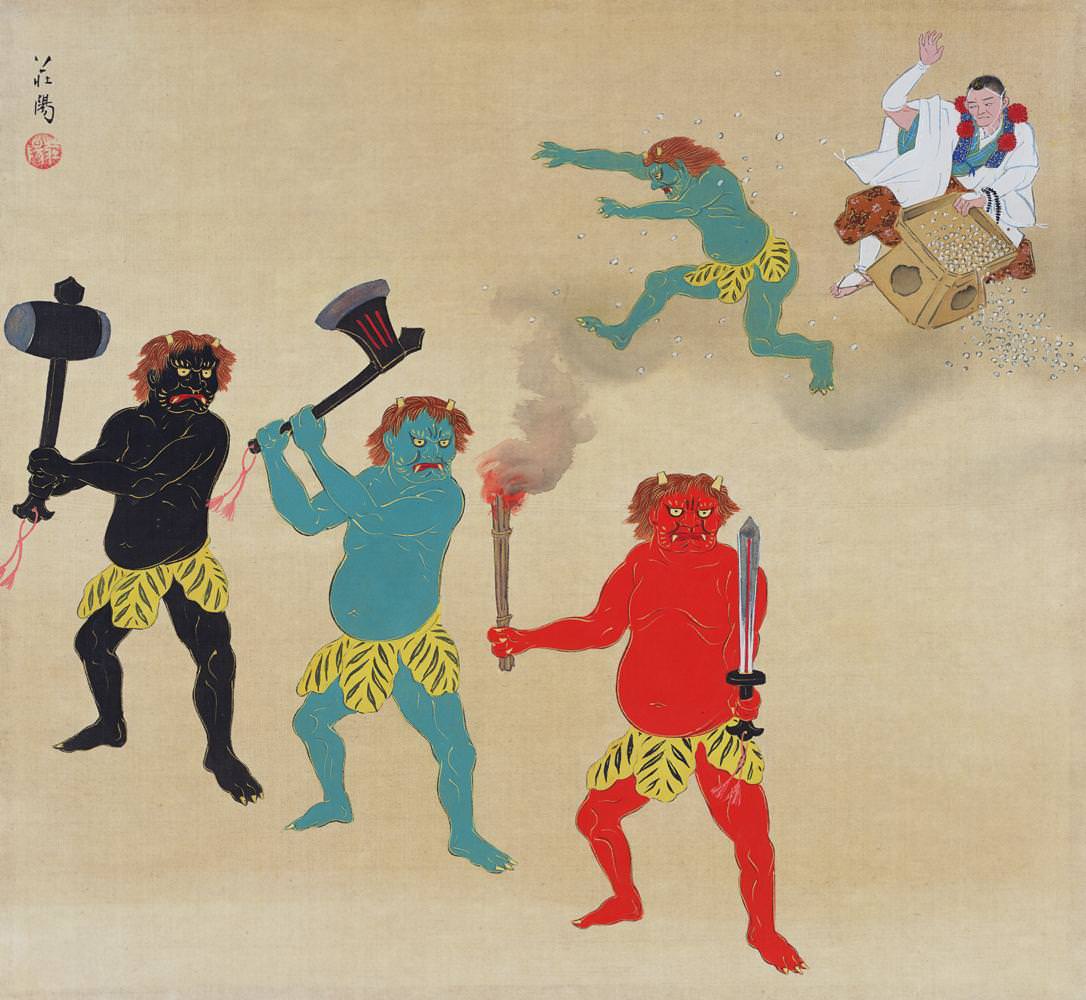
Bold, theatrical figures stride across the silk in saturated reds, blues, and inky black, each rendered with a confident outline and flat fields of color that feel both playful and ceremonial. Horned ogre-like characters brandish a mallet, an axe, a torch, and a sword, while a robed man perched at the upper edge scatters beans from a wooden box as if to drive them away. The warm, open background gives the scene room to breathe, turning every gesture into a clear, storybook moment.
Seen through the lens of 1920s Kyoto artistry, the painting reads like a snapshot of festival performance rather than a quiet studio study. The bean-scattering ritual suggests seasonal customs tied to warding off misfortune, a theme that often surfaces in Japanese celebrations where music, masks, and comic menace mingle with spiritual intention. Details such as shaggy hair, striped loincloths, and exaggerated expressions lean into folklore, making the cultural meaning legible even without a written program.
As part of a wider set of silk paintings depicting different Miyako Festival scenes, this artwork offers collectors and history lovers a vivid gateway into Kyoto’s festival culture and early twentieth-century design sensibilities. The crisp brushwork and decorative simplicity echo the era’s taste for graphic clarity, while the subject matter preserves the energy of public tradition—loud, bright, and a little mischievous. For anyone searching for Kyoto Japan 1920s artwork or Miyako Festival silk paintings, it’s a striking reminder that celebration has long been recorded not only in photographs, but in brilliantly dyed cloth.