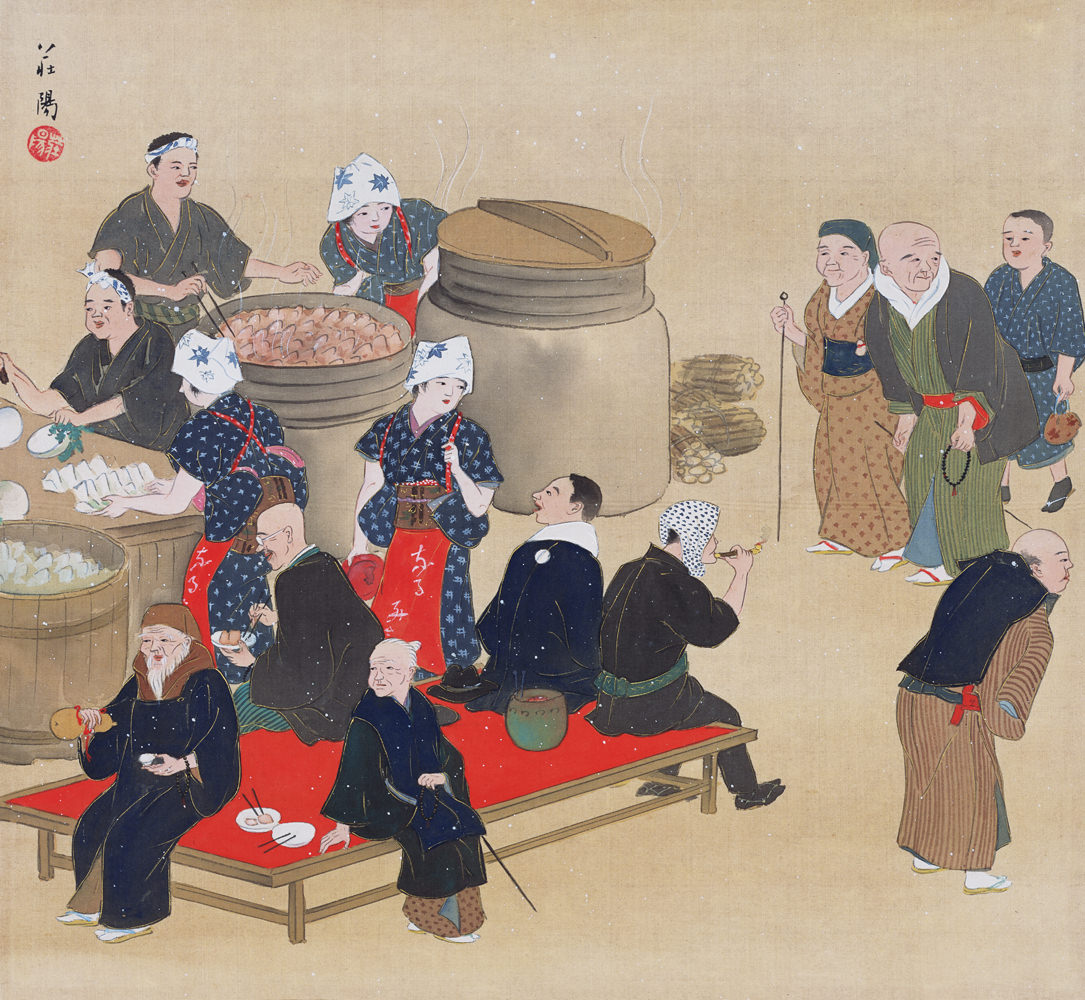
A lively slice of Kyoto festival life unfolds in these 1920s silk paintings, where the bustle is less about grand parades and more about the people who keep celebration moving. Vendors and attendants cluster around steaming tubs and large lidded vessels, while visitors in patterned kimono drift past, pausing to watch, chat, and sample treats. The artist’s delicate lines and soft, powdery background make the reds and indigos pop, turning everyday labor into part of the spectacle.
Details reward a slow look: headscarves knotted for work, ladles in motion, trays of pale, rounded foods prepared in quantity, and low benches set for quick rest. Wisps of steam curl upward, suggesting warmth and scent, and the scene balances humor and tenderness—elders with canes, weary shoulders, and small gestures of hospitality that feel timeless. Rather than isolating a single “moment,” the composition layers many small interactions, capturing the social rhythm that defines a Miyako Festival gathering.
For collectors and readers interested in Japanese art, Kyoto history, and early 20th-century festival culture, this artwork offers an intimate window into how tradition was experienced on the ground. It’s also a reminder that silk painting can be documentary as well as decorative, preserving clothing styles, street-side foodways, and public etiquette alongside beauty. Viewed today, these scenes carry the texture of lived Kyoto—communal, seasonal, and quietly exuberant.