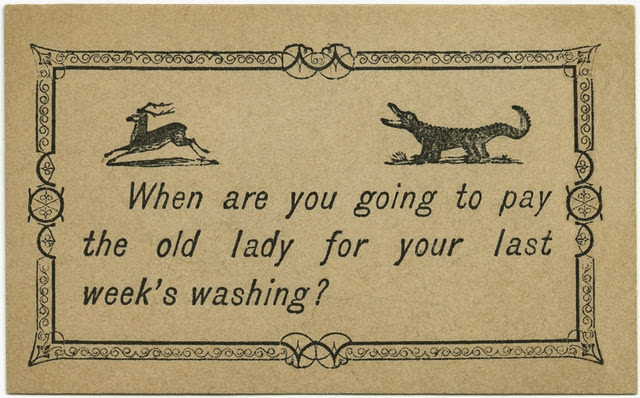
A sharp little joke sits at the center of this 19th-century humorous acquaintance card: “When are you going to pay the old lady for your last week’s washing?” It’s the kind of pointed, domestic tease that could spark conversation precisely because it tiptoes along the edge of rudeness, then disarms with wit. These funny cards worked as social shortcuts—handed across a table or slipped into a palm—inviting a reply, a laugh, or at least a raised eyebrow.
Bordered by ornate Victorian-style flourishes, the design frames the quip like a miniature stage, complete with playful animal figures that add motion and mischief to the message. The lettering feels casual and direct, as if the card is speaking in an everyday voice rather than putting on grand airs. That contrast—fancy frame, cheeky line—captures the era’s taste for humor that was both decorative and a little daring.
Humorous acquaintance cards like this offer a glimpse into how people once navigated introductions, flirting, and friendly needling without the comfort of instant messaging. The reference to weekly washing hints at commonplace routines, small debts, and the social currency of reputation—topics everyone understood and therefore everyone could laugh about. For collectors and history lovers, it’s a compact piece of Victorian humor and print culture, reminding us that breaking the ice has always benefited from a well-timed, slightly impudent joke.