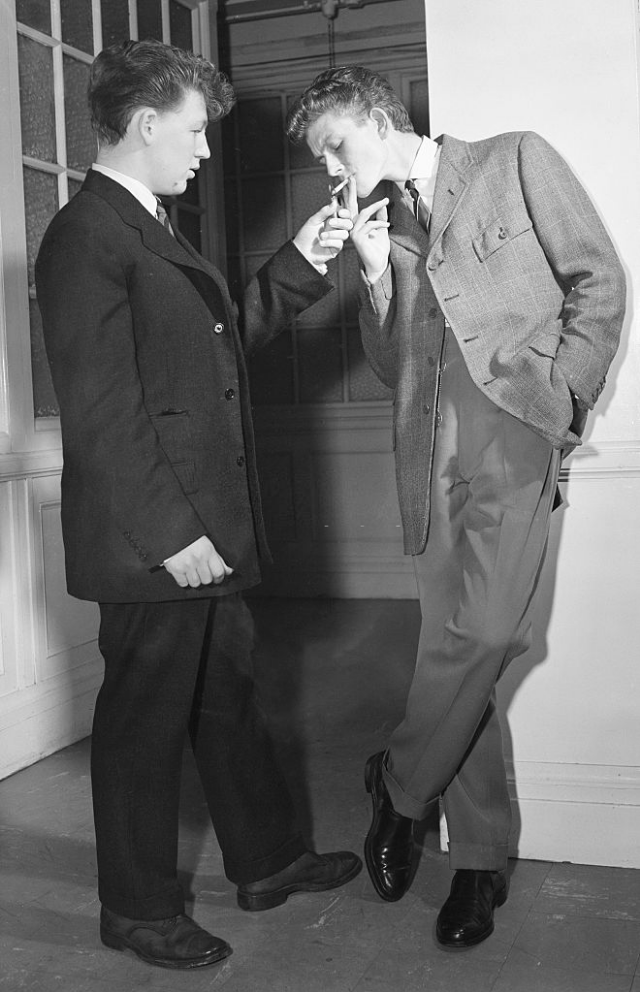
Leaning into a doorway with an easy swagger, two sharply dressed youths bring the Edwardian revival of the 1950s into crisp focus. One, in a lighter suit with a narrow tie and neatly combed hair, pauses mid-gesture as a cigarette is lit; the other stands squarely in a darker, longer-cut jacket, watching the flame with the quiet confidence of someone who knows the look works. Their polished shoes, relaxed stance, and carefully arranged silhouettes turn an everyday hallway into an impromptu fashion stage.
Details in the tailoring suggest why the Teddy Boy style caused such a stir: structured shoulders, long lines, and a deliberate contrast between jacket and trousers that nods to earlier menswear while feeling distinctly modern for post-war youth. Even without bright colors, the textures and cuts read clearly—one suit appears patterned, the other more solid, both worn with the kind of intention that makes clothing a statement rather than mere necessity. The cigarette-lighting moment adds to the performance, capturing the social ritual that often accompanied youth culture and its poses of cool.
November 1955 sits at a point when British and international popular culture were increasingly shaped by teenagers and young adults, and fashions like these signaled both aspiration and defiance. Edwardian suits on young bodies hinted at class and heritage, yet their adoption by youth subcultures turned tradition into provocation, a reworking of old prestige into new identity. For anyone searching vintage 1950s fashion photography, Teddy Boy suits, or the broader story of style as rebellion, this scene offers a compact, vivid glimpse of how clothes helped announce a generation.