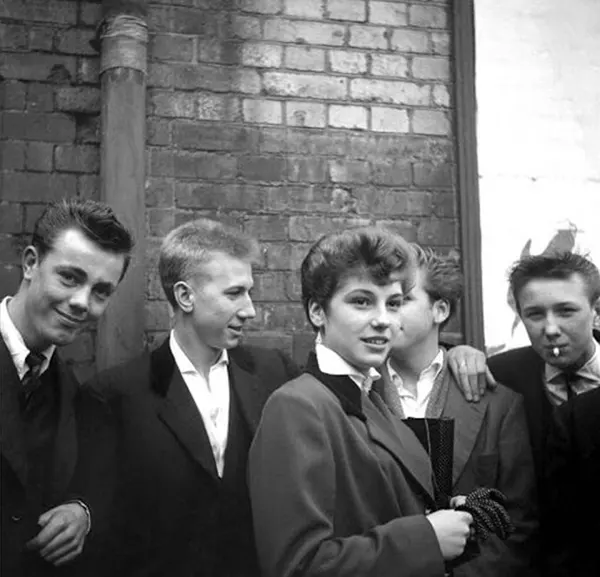
Against a rough brick wall, a small gang of teenagers leans in close, dressed with the sharp intent that defined Teddy Boy and Teddy Girl style in 1950s Britain. Dark, tailored jackets, crisp white shirts, and narrow ties signal a taste for Edwardian-inspired swagger, while slicked-back hair and carefully sculpted quiffs turn grooming into a statement. The street backdrop feels ordinary, yet the clothes insist on drama—youth making itself visible in a world still rebuilding and still watchful.
At the center, a young woman meets the camera with calm confidence, her neat collar and fitted coat suggesting the polished edge Teddy Girls brought to a scene often told through the boys. Around her, the lads angle their shoulders and trade glances, one arm thrown companionably over another, as if caught between posing and simply hanging about. A cigarette and a half-smile add to the impression of hard-earned cool, the kind of attitude that made “Teds” both fashionable icons and frequent targets of moral panic.
More than a snapshot of friends, the photograph reads like a lesson in postwar youth culture and working-class style—how secondhand tailoring, small details, and attitude could become a uniform of belonging. The mix of tidy lines and rebellious flair hints at the dance halls, cafés, and street corners where rock ’n’ roll, skiffle, and new social freedoms were taking hold. For anyone exploring vintage fashion, 1950s subcultures, or the origins of modern street style, this moment captures the Teddy movement’s lasting power: elegance worn with defiance.