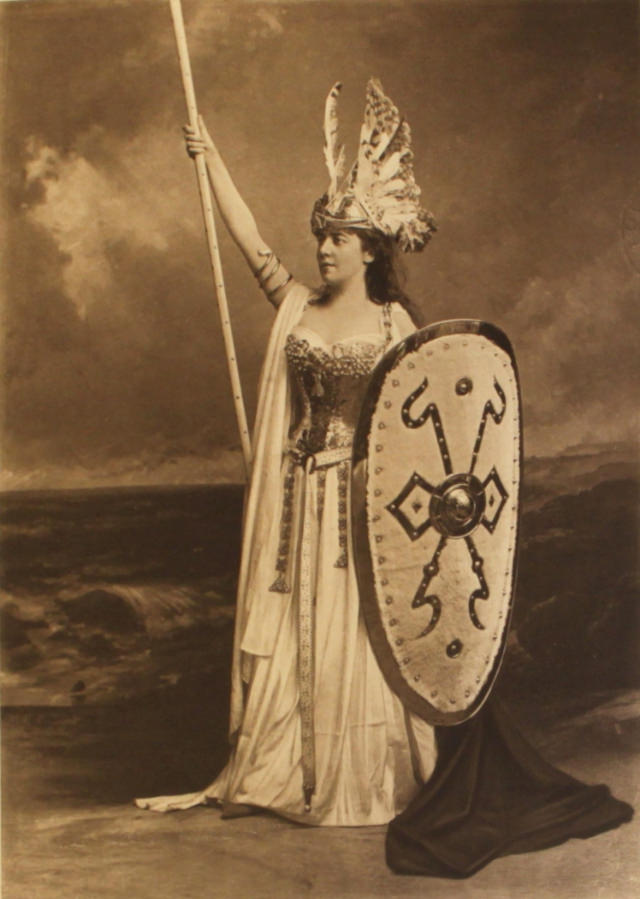
Arm raised with a long spear, a costumed woman poses like a mythic sentinel, her gaze turned to the side as if listening for distant horns. A dramatic studio backdrop suggests sea and sky, heightening the theatrical mood, while a heavy drape pools at her feet to frame the figure. The effect is part society portrait, part stage publicity—precisely the sort of carefully composed fantasy that late-Victorian high culture loved.
The outfit leans into Wagnerian spectacle, recalling Brunhilde from the Ring cycle with a winged or feathered helmet, a corseted bodice, and a sweeping cloak. In her other hand she steadies a large oval shield marked with bold, symmetrical motifs, its central boss catching the light like polished metal. Details such as arm bands, embellished trim, and the interplay of pale fabric against darker textiles emphasize craftsmanship and wealth, turning operatic legend into wearable fashion.
Wagner remained immensely popular in the 1890s, and this portrait—identified in the title as a Brunhilde costume (Mrs Leslie)—shows how opera, myth, and aristocratic display blended at grand fancy-dress events like the Devonshire House Ball. Rather than a literal attempt at medieval accuracy, the costume offers a romanticized “Valkyrie” silhouette designed to read instantly in a crowded ballroom and in photographs afterward. For historians of fashion and culture, it’s a vivid example of how elite guests used iconic music and theatrical imagery to signal taste, modernity, and social status in the late Victorian era.