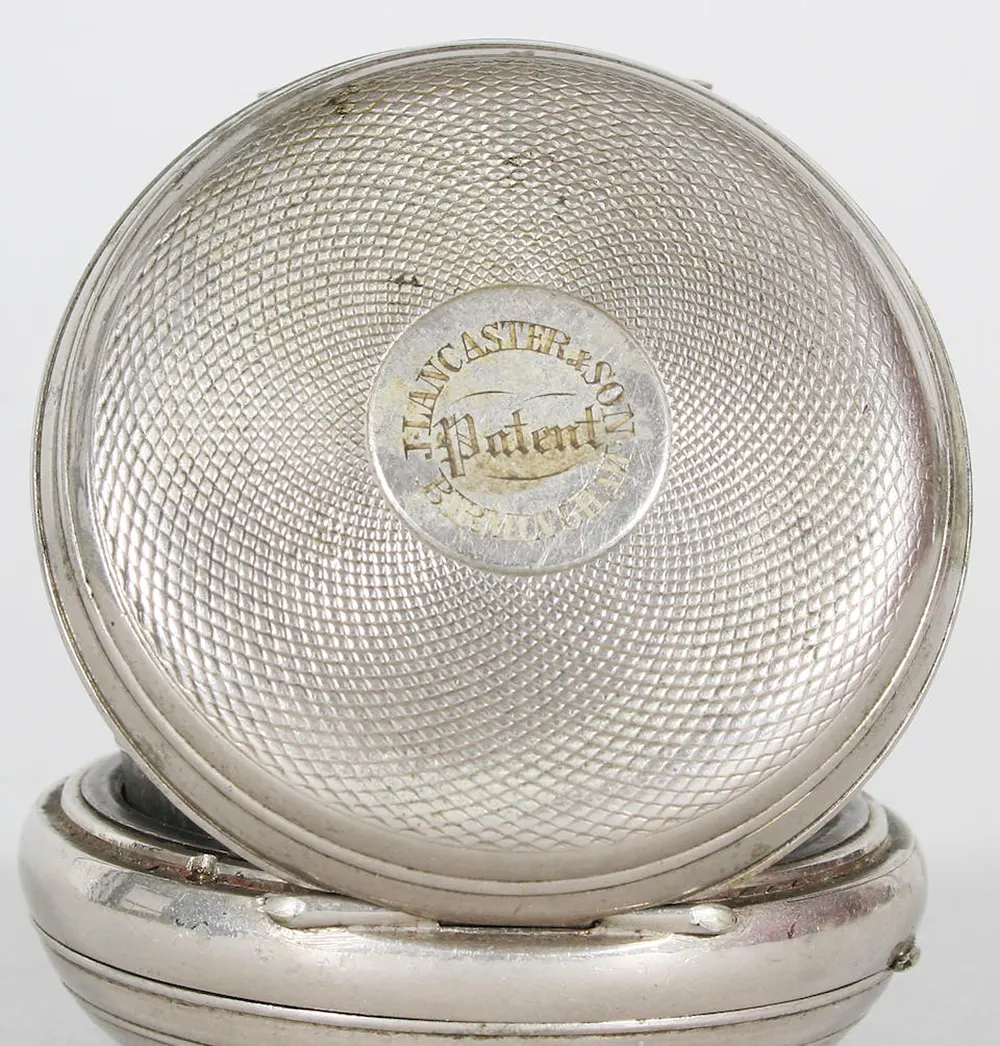
Brushed metal and tight engine-turned patterning make the Lancaster Watch Camera look, at first glance, like an ordinary pocket watch—exactly the sort of respectable accessory a Victorian gentleman or lady might carry without a second thought. In the center, the maker’s mark and the word “Patent” hint that this was never merely a timepiece, but a cleverly disguised photographic device built for an age obsessed with miniaturization and mechanical surprise. Even in close-up, the craftsmanship reads as both decorative and purposeful, designed to withstand handling while keeping its secret.
Behind that discreet face lay the radical promise of candid photography: a camera small enough to be worn, carried, and used quickly, without the bulk of tripods and boxes that defined earlier practice. Devices like this Lancaster model belonged to a world where technology was becoming personal—pocket-sized inventions that turned everyday objects into tools for observation, documentation, and, inevitably, covert looking. The watch form wasn’t just stylish; it was camouflage, letting the photographer blend into crowds and capture scenes with unprecedented ease.
Collectors and history lovers now read these details as clues to Victorian attitudes about privacy, novelty, and modern life speeding up. The Lancaster Watch Camera sits at the crossroads of horology and early photography, a “spy camera” before the term became common, and a reminder that today’s hidden lenses have deep roots in 19th-century ingenuity. As a historical artifact, it offers SEO-rich fascination for anyone exploring antique cameras, Victorian inventions, and the surprising origins of portable surveillance.