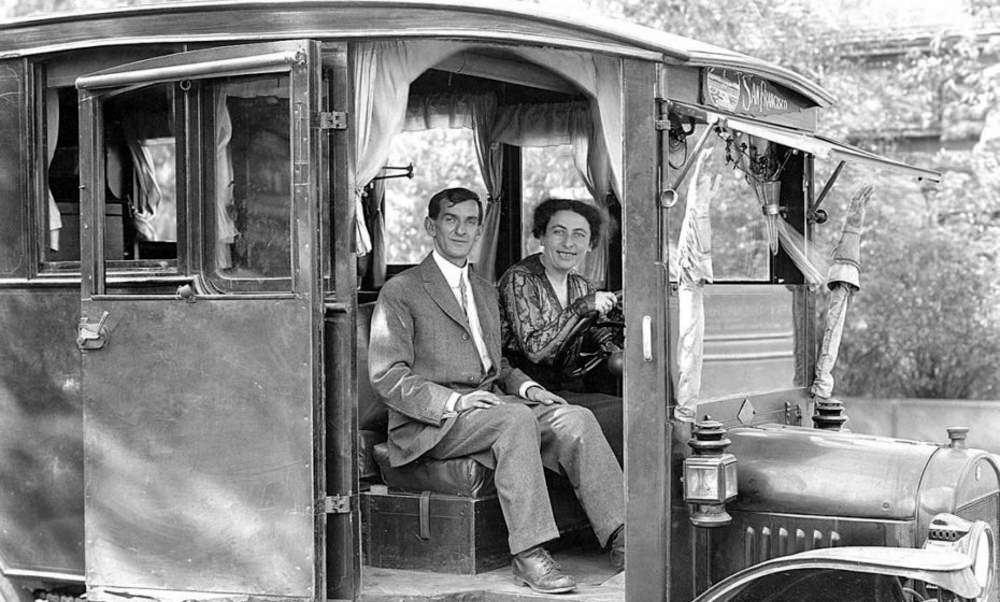
Rolling out of the early automobile age, “The Adventurer” reads like a promise painted into sheet metal and wood: a Model T–based motorhome concept built for people who wanted roads to lead somewhere new. The photo highlights the vehicle’s coach-built body, with a roomy cabin replacing the usual open touring lines, and a wide side opening that turns the car into a little parlor on wheels. Even at a glance, it feels less like a modified car and more like an early attempt at what we’d now call an RV.
Inside the doorway, curtains, cabinetry, and compact fixtures suggest a careful balancing act between comfort and practicality—luxuries made portable in an era when long-distance travel still required grit. A couple sits at the front, posed with the calm confidence of early motorists, as if demonstrating that touring could be civilized rather than strictly mechanical. Details like the tall bodywork, enclosed seating, and integrated living space show how inventors and builders were already imagining the automobile as a home away from home.
For anyone interested in 1910s inventions, this historical image offers a fascinating bridge between the Model T’s mass mobility and the later rise of camper vans and motorhomes. The Adventurer embodies the early twentieth-century urge to engineer independence: carry your shelter, your supplies, and your sense of possibility in one compact machine. It’s a reminder that the dream of the open road didn’t wait for modern highways—it started as soon as people could bolt imagination onto a dependable chassis.