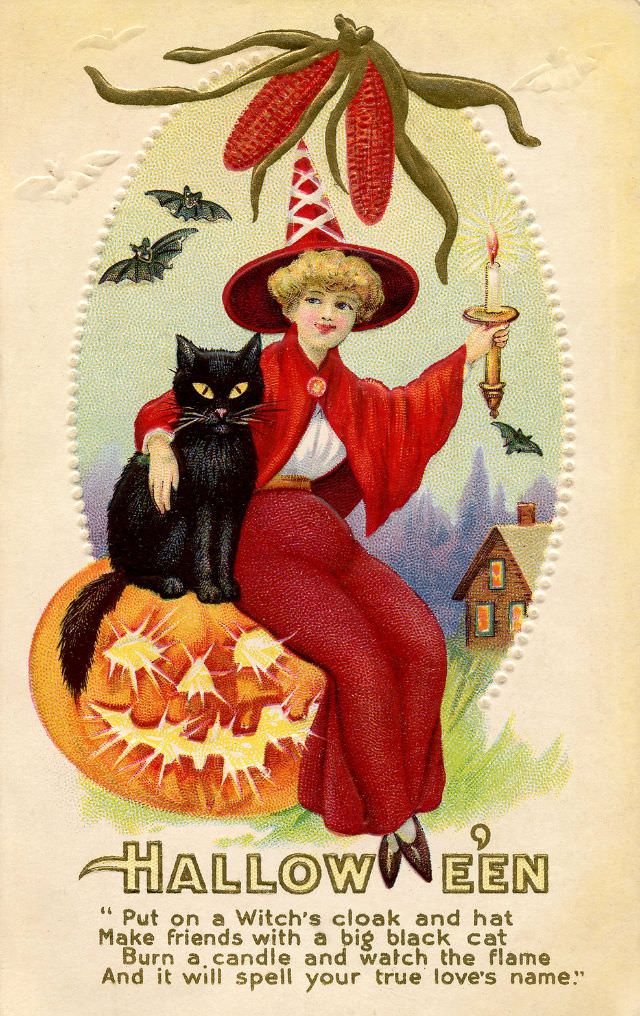
Rich autumn color and playful superstition meet on this charming Hallowe’en cover art, where a rosy-cheeked figure sits in a pointed hat and flowing cloak, posed like a storybook witch at the edge of a glowing jack-o’-lantern. A sleek black cat, all bright eyes and arched posture, claims pride of place beside them, while small bats flutter through a pale sky. Overhead, corn leaves and ears form an ornamental flourish, tying the scene to harvest imagery that long shaped Halloween’s look and mood.
The illustration leans into the era’s fondness for “safe spookiness,” swapping terror for theatrical costume, warm candlelight, and a wink at fortune-telling. In one hand, the figure lifts a candle on a small holder, its flame rendered as a delicate spark against the dusky background; in the distance, a tiny house with lit windows adds a domestic note, as if the night’s mischief remains close to home. Details like the beaded border and crisp, saturated inks suggest printed ephemera designed to be eye-catching—perfect for a postcard, magazine cover, or seasonal advertising.
Beneath the artwork, the title line “Hallowe’en, Put on a Witch’s Cloak and Hat” and the accompanying rhyme invite readers into a ritual of playful charm: dress the part, befriend the black cat, watch the candle’s flame, and learn your “true love’s name.” It’s a revealing snapshot of how popular culture packaged old folk beliefs into romantic entertainment, blending courtship, costume, and cozy fright. For collectors and historians of Halloween imagery, this piece offers a vivid example of the holiday’s early visual vocabulary—pumpkin grins, bats in flight, and a witch who feels more whimsical than wicked.