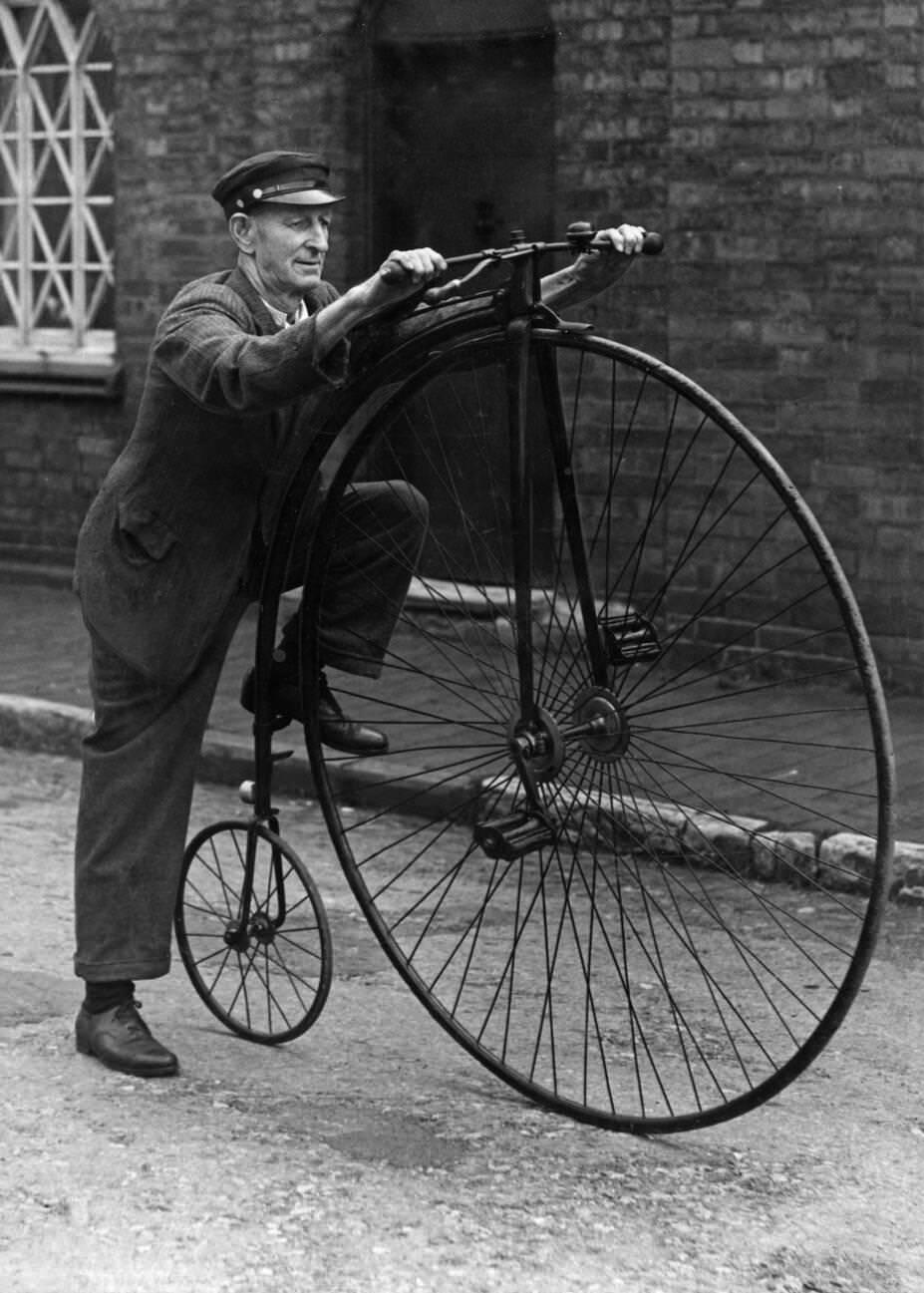
Leaning into the tall handlebars, a cyclist steadies himself beside a penny-farthing, that unmistakable high-wheeler whose oversized front wheel once promised speed at the price of nerve. The brick wall behind him and the gritty street underfoot frame the scene with everyday realism, reminding us that this was not a museum piece in its own time but a working machine that demanded balance, strength, and practice. Details like the cap, practical clothing, and poised stance pull the viewer close to the human side of early cycling culture.
The engineering is the real drama here: a huge driving wheel with dense spokes, a tiny trailing wheel for support, and a direct-drive setup that turned every pedal stroke into forward motion without the comfort of modern gearing. In photographs like this, the penny-farthing becomes a symbol of invention in motion, bridging the gap between experimental contraptions and the bicycle designs that would soon become familiar worldwide. Even at rest, the machine’s height and proportions convey why mounting and dismounting were as much performance as routine.
For anyone searching vintage cycling photographs, early bicycle history, or the penny-farthing era, this image offers a vivid doorway into the age when personal transport was being reinvented on two wheels. It speaks to urban streets before mass motor traffic, to craftsmanship and mechanical curiosity, and to the quiet bravery of riders who trusted steel rims and simple mechanics with their daily journeys. The result is timeless: a portrait of ingenuity where invention and ordinary life meet at the curb.