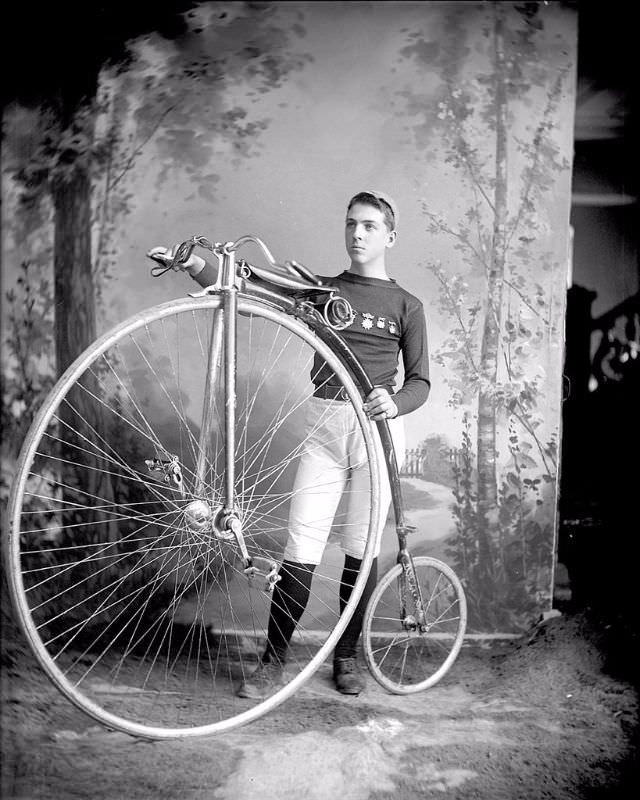
Towering over its rider, the penny-farthing stands like a mechanical marvel from cycling’s boldest experimental age, its enormous front wheel dominating the frame and the delicate rear wheel trailing behind. The studio setting—complete with a painted woodland backdrop—turns the scene into both portrait and advertisement, inviting the viewer to admire the machine’s spidery spokes, slender fork, and high-mounted saddle. Even without a named maker or visible location, the photograph communicates the awe these early “inventions” inspired when speed and style were literally elevated.
Leaning casually with one arm resting across the handlebars, the cyclist poses with the calm confidence of someone showing mastery over an awkward, thrilling contraption. The fitted riding kit and long stockings hint at the sporting culture that grew around high-wheel bicycles, when balance and nerve were as important as strength. Details like the prominent front wheel hardware and the clean geometry of the frame draw attention to how engineering choices shaped the experience—fast on smooth roads, risky when stopping, and always conspicuous.
Few artifacts illustrate the penny-farthing era as vividly as portraits like this, where human ambition and new technology share the spotlight. For readers searching vintage cycling photographs, early bicycle history, or the evolution of bicycle design, this image offers a clear window into a time before the “safety bicycle” became the norm. It’s a reminder that progress often arrives on improbable wheels—beautiful, impractical, and unforgettable.