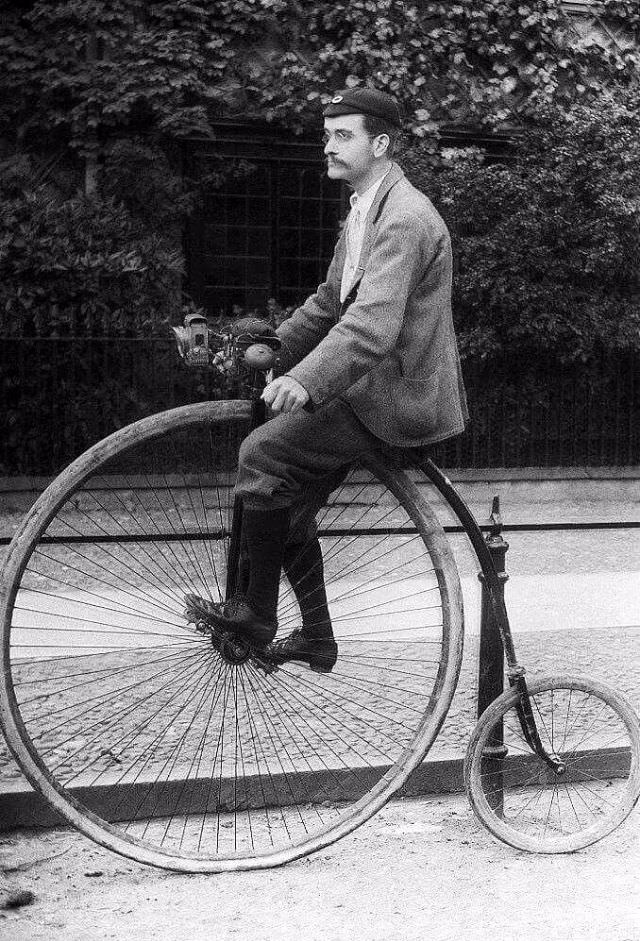
Perched high above the street on a penny-farthing, a neatly dressed rider pauses in profile, his cap, jacket, and tall boots lending a quietly formal air to a machine that looks anything but ordinary. The oversized front wheel dominates the frame, its fine spokes and slender tire forming a near-perfect circle, while the much smaller rear wheel trails behind like an afterthought. Even the simple background of fencing and dense foliage helps the bicycle’s silhouette stand out, emphasizing the daring height and balance this style demanded.
Look closely and the era’s “inventions” feel tangible: direct-drive pedals fixed to the big wheel, a minimalist frame, and a handlebar arrangement that hints at early efforts toward comfort and control. The rider’s upright posture and steady gaze suggest familiarity rather than spectacle, as if this was a practical way to move through town despite its obvious risks. Details like the seat position over the front wheel and the absence of modern braking cues remind us how rapidly cycling technology evolved once safety, speed, and everyday usability became priorities.
Nostalgia often clings to vintage cycling photographs, but the penny-farthing era was also a serious experiment in engineering and social change—mobility elevated, literally, by a single bold design choice. This post gathers that spirit in one timeless view, celebrating the craftsmanship and audacity behind early bicycles and the people who rode them. If you’re searching for penny-farthing history, antique bicycle design, or the origins of modern cycling culture, this image offers a striking starting point.