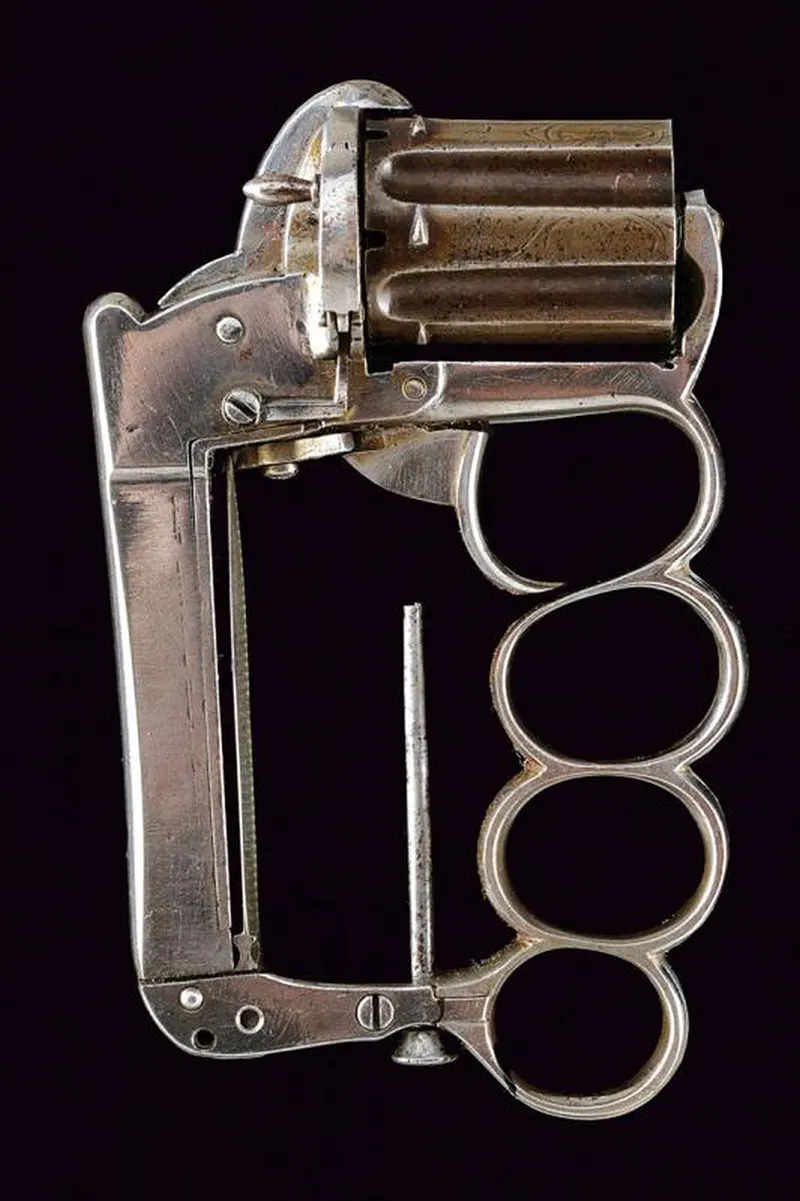
Metalwork and menace meet in this unusual 1870-era invention: a compact revolver fused to a knuckleduster. The photograph highlights the blunt practicality of the design—four finger rings forming the grip, a small multi-chamber cylinder perched above, and a rigid frame that seems built as much for impact as for firing. Scratches, dulled polish, and tight seams in the mechanism invite a closer look at how makers tried to miniaturize firepower without sacrificing intimidation.
Seen up close, the piece reads like a conversation between two worlds of personal defense, combining the close-quarters force of brass knuckles with the promise of a handgun in a single concealable object. The ringed handle suggests fast deployment and retention in the hand, while the short barrel and compact cylinder point toward point-blank use rather than distance. For collectors and historians of antique weapons, it stands as a stark example of how innovation often followed fear—street crime, crowded spaces, and the desire for an edge when danger felt near.
As a historical photo for an “Inventions” post, this knuckleduster/revolver sits at the intersection of engineering ingenuity and social anxiety. It reminds us that the 19th century wasn’t only an age of grand machines and industrial progress, but also a time when inventors experimented with ever more portable tools of violence. Whether viewed as an artifact of self-protection or as a cautionary design, it remains a striking entry in the story of early concealed weapons and hybrid firearms.