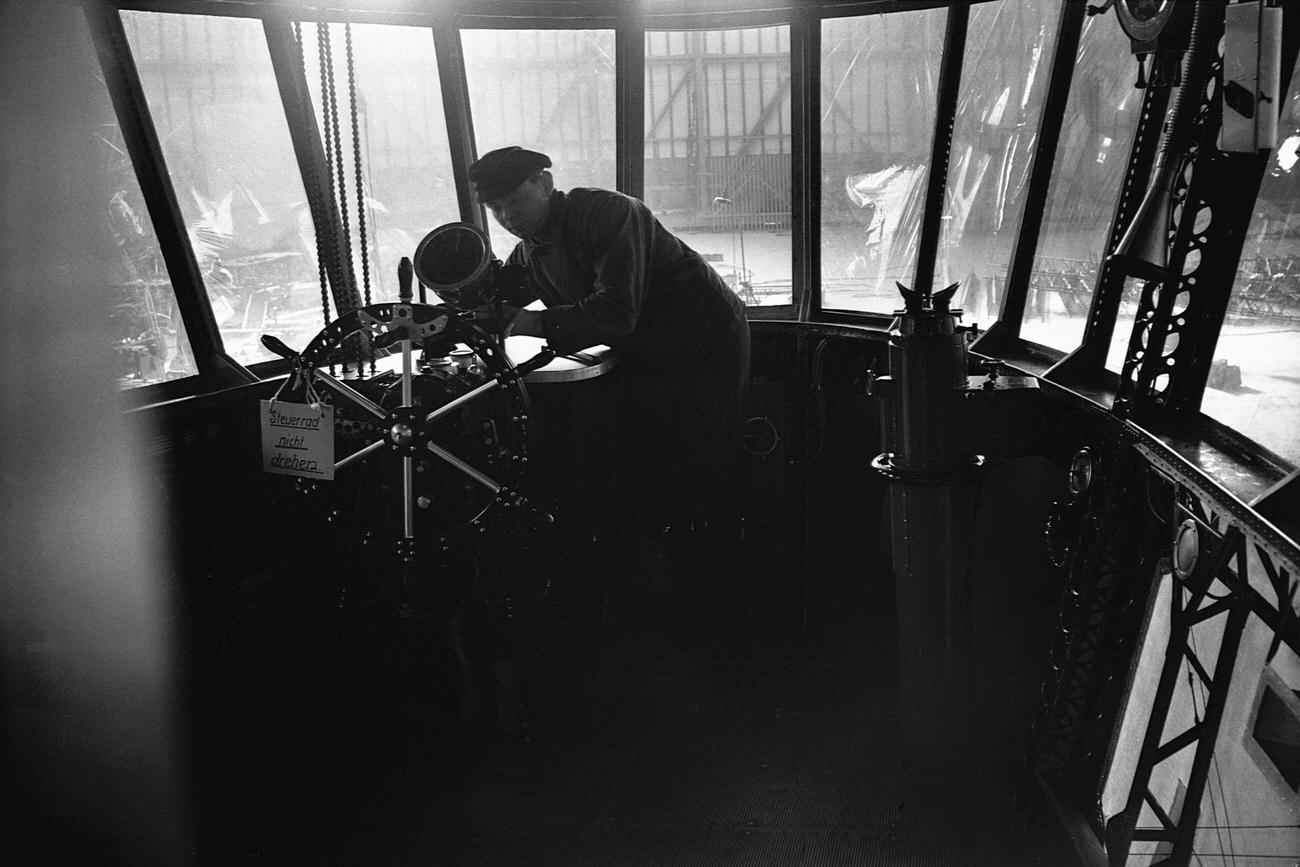
Inside the cockpit of the Hindenburg airship, a crewman leans over a clustered array of wheels, levers, and dials, framed by tall windows that wrap the control room like a watchtower. The space feels part ship’s bridge, part early aircraft, with exposed metalwork and a utilitarian layout that kept the essentials within reach. A small German warning placard near the steering wheel hints at the disciplined procedures behind passenger airship travel.
Light pours through the glass, catching the matte surfaces of instruments and the mechanical elegance of the control console. Chains, gauges, and hand-operated controls suggest a world before automated flight management—when steady hands and practiced eyes translated weather, ballast, and engine response into safe, level travel. The view beyond the windows is hazy and industrial, reinforcing the sense that this marvel of engineering belonged as much to the ground crews and hangars as to the open sky.
For anyone exploring the history of aviation inventions, the Hindenburg’s cockpit offers a compelling look at how rigid airships were flown and managed. It’s a reminder that the era’s grand promises of long-distance, lighter-than-air travel depended on meticulous navigation and teamwork in tight quarters. As a historical photo, it preserves the textures of interwar technology—practical, mechanical, and intensely human—at the controls of one of the most famous airships ever built.