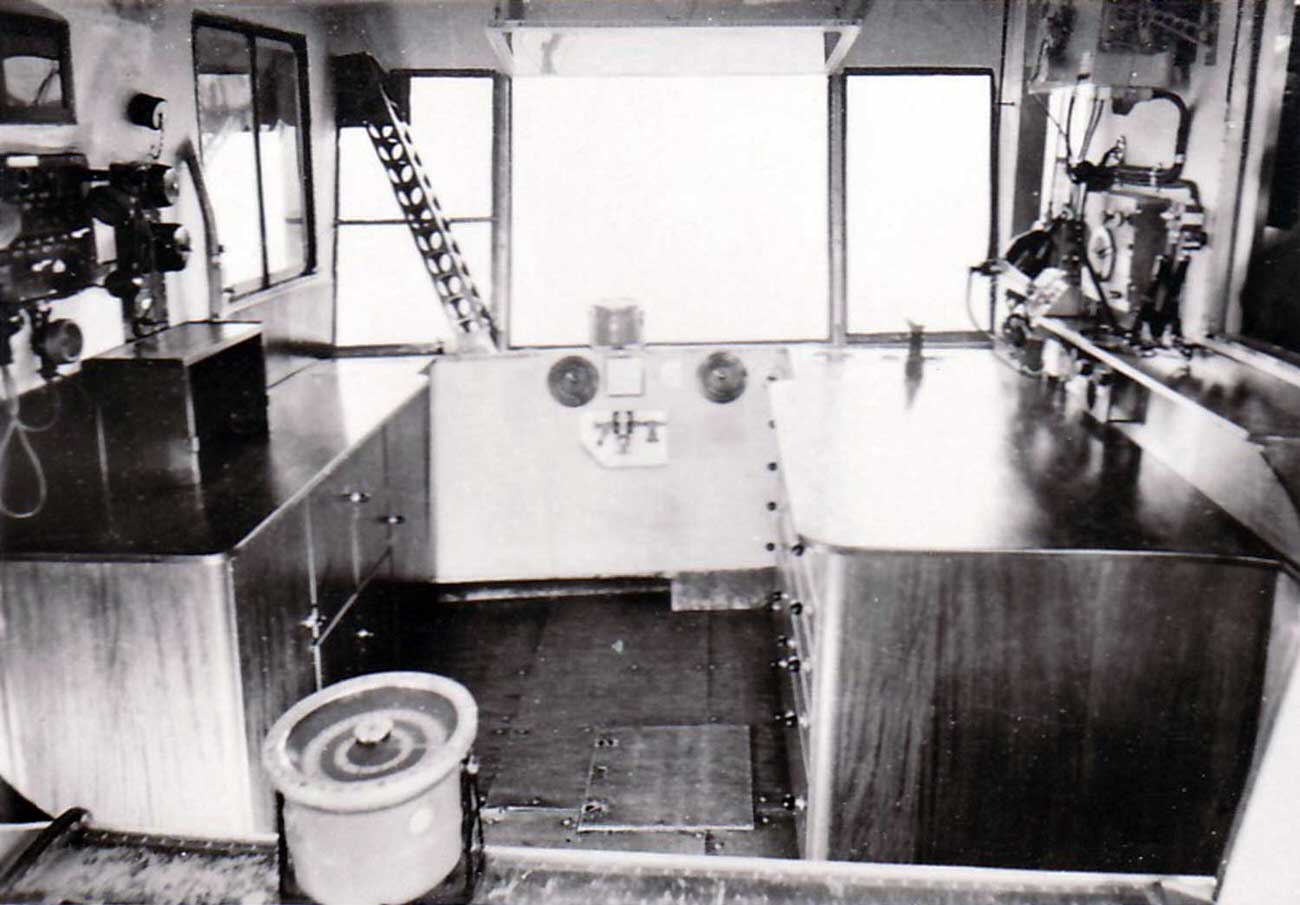
Stepping into the navigation room on the Hindenburg, you’re met by a compact, purposeful space where metal surfaces, tight passageways, and large forward-facing windows emphasize function over comfort. Cabinets and instrument housings line both sides, while a simple stool hints at the hours spent here watching the sky and the readouts. Even without a crew in view, the room feels active—built for steady hands, quick decisions, and constant attention to the airship’s course.
Details in the photo draw the eye to the machinery of direction: mounted devices, dials, and controls arranged within arm’s reach, with sightlines kept clear toward the horizon. The bright wash of light beyond the windows contrasts with the darker, riveted interior, underscoring how navigation depended on both outside observation and inside instrumentation. A ladder-like structure and the angular layout suggest the layered, compartmentalized design typical of large airships, where every cubic foot served a task.
For readers interested in inventions and early aviation technology, this view offers a rare interior look at how a celebrated zeppelin was actually operated. The Hindenburg is often remembered for its dramatic place in history, yet photos like this remind us that it was also a working machine—an engineered environment of gauges, panels, and practical fittings. As a WordPress feature image, it pairs especially well with posts on airship navigation, interwar engineering, and the everyday realities of flight before modern avionics.