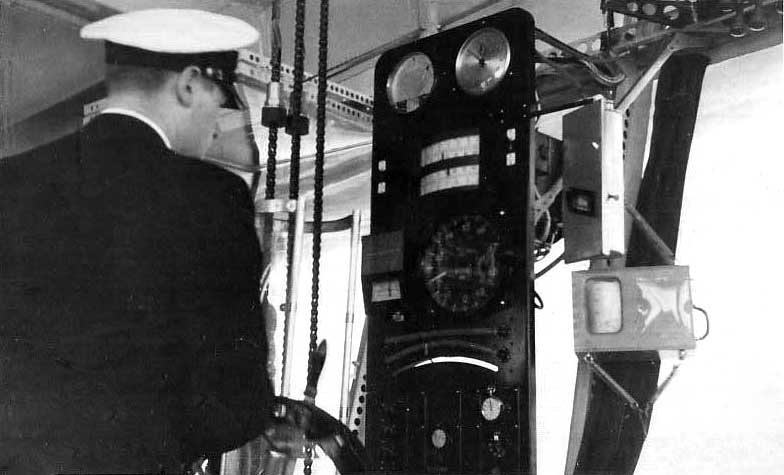
A uniformed crewman stands at a tall instrument board inside the Hindenburg, framed by cables, metal supports, and a bright wash of light from the airship’s structure. The panel is crowded with round gauges and marked scales, the kind of practical, workmanlike technology that turned a giant rigid airship into something navigable and responsive. In close quarters, the machinery feels less like romance and more like routine—hands-on systems watched constantly by trained eyes.
Calling it an “elevator panel” points to the control surfaces that governed pitch and altitude, and the photo hints at how those commands were translated into mechanical action. Dials, levers, and readouts suggest a world before digital automation, when aviation depended on analog feedback and the disciplined interpretation of needles and numbers. It’s an evocative glimpse of airborne engineering where monitoring, adjustment, and redundancy were everyday safeguards.
For readers interested in inventions and early flight technology, this image underscores the sophistication hidden behind the Hindenburg’s famous silhouette. The airship’s interiors were a lattice of frames and instruments, and panels like this were essential to keeping such a vast craft stable in changing weather and wind. Seen today, the elevator control station becomes a reminder that history is often written not only in headlines, but in the quiet precision of the machines that made ambitious travel possible.