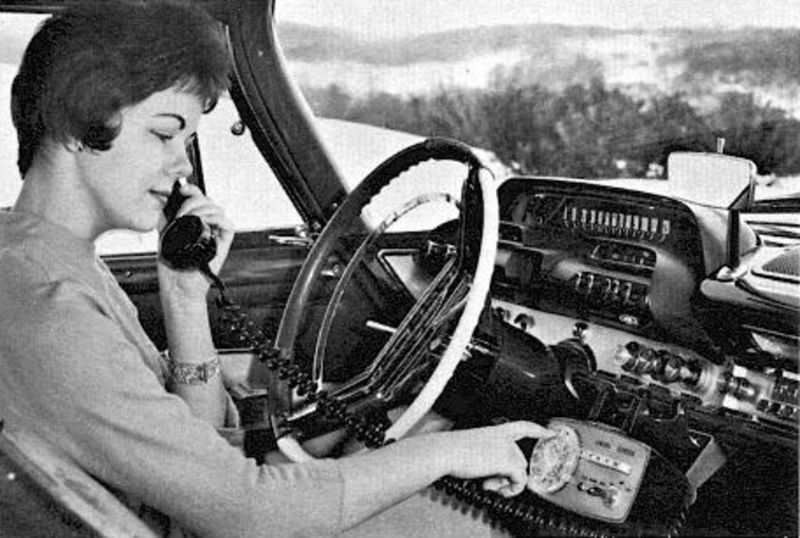
Tucked behind the broad steering wheel of a DeSoto, a driver lifts a handset to her ear while an early car phone unit rests within reach, its cord looping across the cabin like a promise of the future. The dashboard bristles with mid-century detail—chrome accents, clustered knobs, and a sweeping instrument panel—showing how 1950s automotive design aimed to feel both luxurious and command-center modern. Outside the windows, a blurred landscape hints at open-road freedom, the natural backdrop to a new kind of connected travel.
Long before pocket-sized devices and wireless networks, mobile calling was bulky, wired, and unmistakably novel, often demonstrated as much for spectacle as for practicality. Scenes like this helped sell the idea that tomorrow’s driver would do more than steer: they would communicate, coordinate, and stay reachable even while in motion. For historians of technology and design, the photo speaks to that moment when “inventions” shifted from the laboratory to everyday life—starting, as so many trends did, inside the car.
DeSoto enthusiasts and collectors of vintage electronics alike will recognize the appeal of this era’s optimism, when progress was measured in dashboards and attachments as much as horsepower. The image works beautifully as a conversation starter about early mobile telephony, car culture, and the marketing of modern convenience in the mid-20th century. Whether you’re researching 1950s technology, classic American automobiles, or the roots of the smartphone age, this snapshot bridges two worlds: cruising and calling, united in one memorable interior.