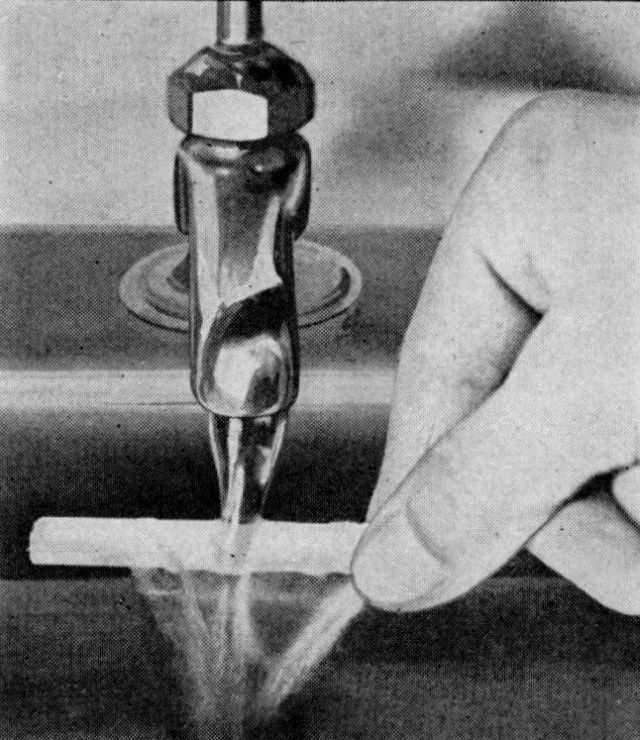
Running water pours from a faucet while a hand steadies a cigarette wrapped in a clear sleeve, turning a simple sink-side moment into an advertisement for modern ingenuity. The title, “New Cigarette Put Up in Waterproof Paper,” hints at a time when packaging itself was treated as an invention—something to be demonstrated, tested, and marveled at. In the frame, the protective wrapper looks smooth and tightly fitted, inviting viewers to imagine the contents staying dry even under a steady stream.
Product photography like this leaned on everyday domestic fixtures to sell big promises: convenience, reliability, and a little bit of scientific confidence. Waterproof paper or film would have appealed to smokers who carried cigarettes outdoors, in pockets, or in damp conditions where ordinary paper could fail. The dramatic contrast of water and wrapper makes the point instantly, using a straightforward experiment rather than flowery claims.
Seen today, the photo works on two levels—as a glimpse into the history of consumer packaging and as a reminder of how innovation was marketed through tactile proof. The close-up composition focuses attention on materials and function, underscoring how “new” often meant better sealing, better storage, and better protection for everyday goods. For readers interested in inventions, advertising history, or the evolution of cigarette packaging, this image captures a small but telling chapter in the story of modern consumer products.