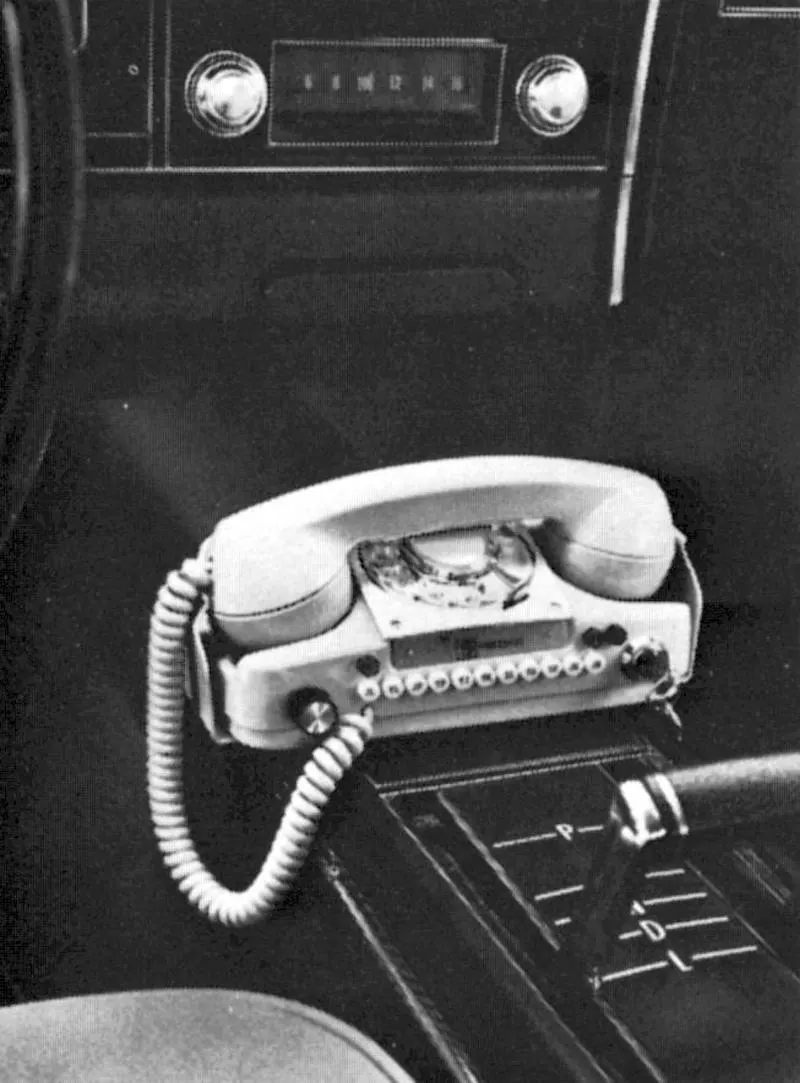
Mounted low on the center console, a hefty handset and coiled cord sit where a modern cup holder might be, turning an ordinary car interior into a rolling communications hub. The device looks closer to a home telephone than anything pocket-sized, complete with a cradle and prominent controls that suggest careful, deliberate dialing. Above it, the dashboard radio hints at an era when in-car sound and in-car calling were separate marvels competing for space.
Car phones didn’t begin as sleek accessories; they arrived as engineering compromises—bulky hardware, limited coverage, and service reserved for those who could justify the cost. Early mobile calling often relied on powerful transmitters and dedicated channels, with audio routed through a handset like the one pictured, making every conversation feel both futuristic and conspicuously public. Even without a visible brand or label, the design speaks to the long transitional period when “mobile” still meant tethered to the vehicle.
Dialing Through Decades follows that transformation from the mid-century experiments through the refinements that carried car phones into the late 20th century. Along the way, the story touches on shifting dashboard design, changing expectations of accessibility, and the steady miniaturization that moved communication from console-mounted hardware to truly personal devices. For readers hunting the history of car phones, automotive technology, and early mobile networks, this photo offers a vivid reminder of how much ingenuity it took to make a call on the road.