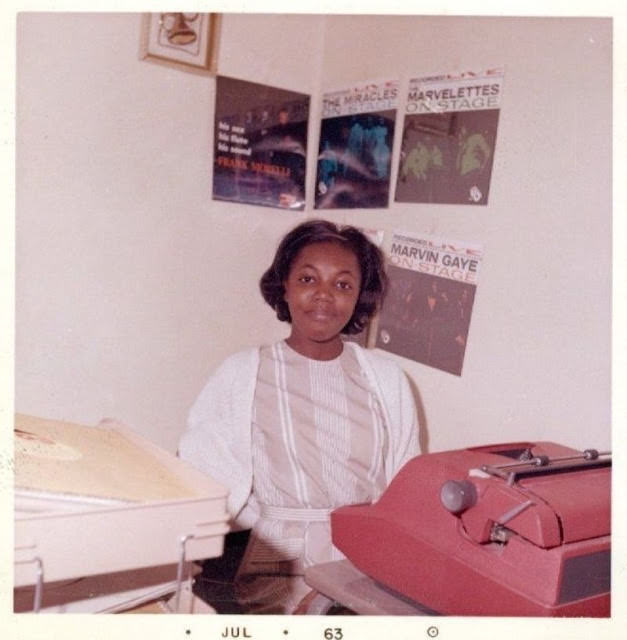
A quiet office corner comes alive here with the unmistakable presence of a sturdy typewriter in the foreground, its bold casing and mechanical levers hinting at the steady rhythm of work that once filled rooms like this. The woman seated behind it looks calmly at ease, framed by a desk stacked with papers and the everyday orderliness of an administrative space. Details on the wall—record sleeves and a small framed picture—add a personal note, reminding us that even in work settings, people carried their tastes and identities with them.
Typewriters were more than “past inventions”; they were the backbone of communication for decades, turning drafts into letters, memos, and manuscripts with each firm keystroke. For many women, typing and office work became a visible pathway into paid employment and professional life, even as expectations and opportunities varied widely by era and workplace. The machine’s design—solid, practical, and built for repetition—speaks to a time when precision and patience were part of the job description.
Historical photos of ladies using typewriters invite us to notice the small, telling objects: the paper ready to be fed into the roller, the tidy workspace, the cultural ephemera pinned behind the desk. Together, these elements create a snapshot of everyday labor and the technologies that shaped it, long before keyboards and screens became standard. In a gallery of vintage office scenes, this moment stands as a reminder that innovation often lives in routine—where invention meets daily life one line at a time.