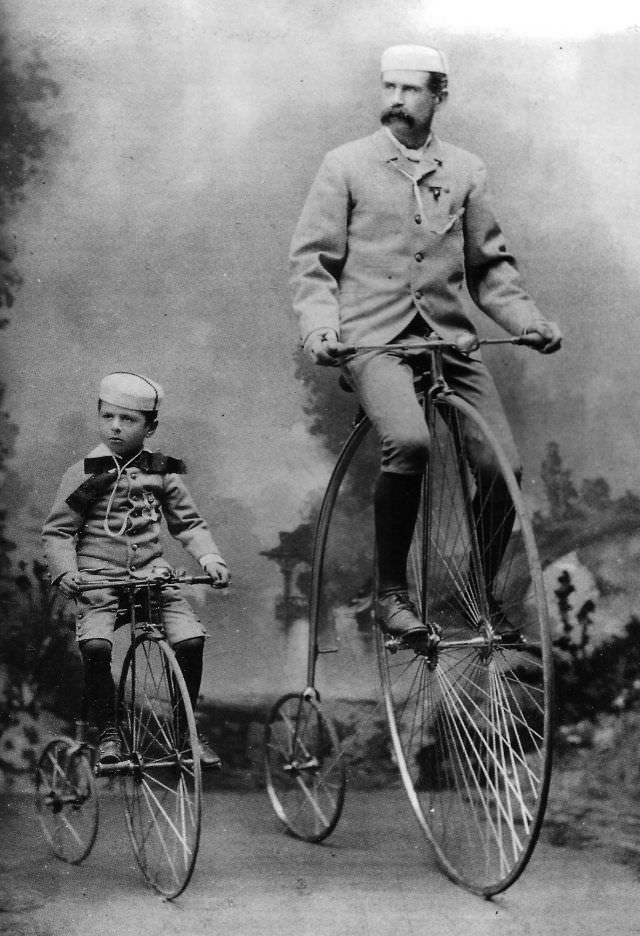
Poised high above the ground, a moustached rider in a neat suit balances on a penny-farthing’s towering front wheel, turning a studio-like setting into a stage for modernity. Beside him, a young boy mirrors the pose on a smaller high-wheel bicycle, underscoring how quickly this invention became both aspiration and pastime. The careful clothing, straight-backed posture, and deliberate gaze speak to an era when cycling signaled confidence, status, and a taste for new technology.
The oversized wheel and slim rear wheel reveal the engineering logic that defined early bicycle design: speed through wheel diameter, simplicity through direct drive, and elegance through minimal parts. Spokes radiate like fine wirework, while the narrow frame and small pedals hint at the skill required to mount, steer, and stop—no easy feat on uneven roads. Even without a visible street scene, the photograph evokes the adventurous spirit of late-19th-century cycling culture and the daring reputation of high-wheelers.
Timeless vintage cycling photographs like this one preserve more than a machine; they capture the social theater around invention, where riders performed progress as much as they pursued it. For readers exploring the penny-farthing era, these details help trace the path from high-wheel novelty to safer bicycle designs that would soon reshape everyday transport. Whether you collect antique bicycle imagery or research the history of inventions, this scene offers a vivid window into the moment when two wheels promised a new kind of freedom.