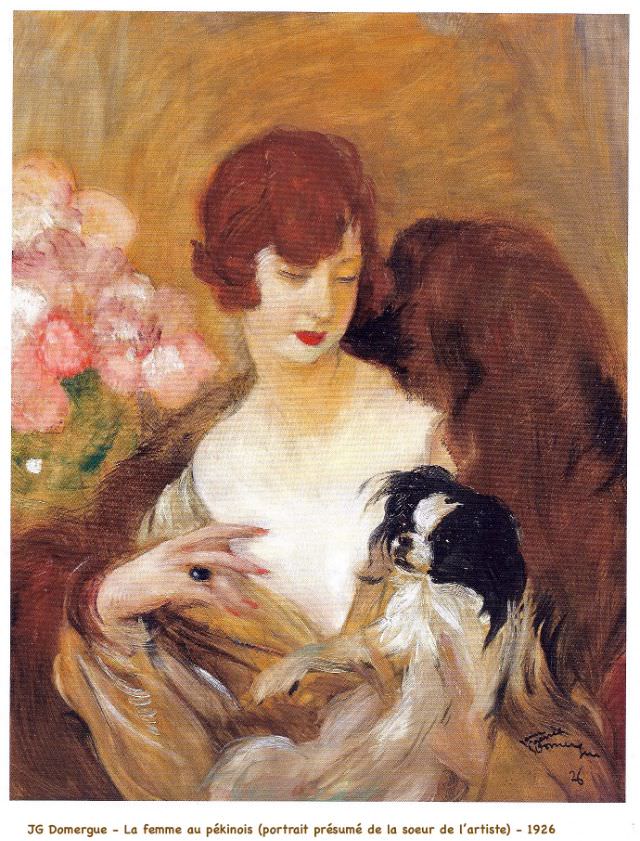
Soft, warm brushwork draws the eye to a poised woman with a sleek bob and striking red lips, her gaze lowered toward a small Pekingese nestled in her arms. The title, *La femme au pékinois, 1926*, frames the scene as both portrait and intimate vignette, where the sitter’s calm expression contrasts with the dog’s alert face. Behind them, a muted interior and a cluster of pink flowers create a gentle backdrop that keeps the focus on touch, texture, and closeness.
Fashion and attitude unmistakably evoke the 1920s: the modern haircut, the delicate line of the shoulders, and the languid pose suggest a world of salons and private rooms rather than public spectacle. The artist’s palette—creamy skin tones, caramel browns, and soft rose—turns the moment into something almost whispered, as if we’ve stumbled upon a quiet pause between conversations. Even the Pekingese, a symbol of companionship and status in many interwar portraits, becomes a focal point for tenderness rather than display.
For readers interested in 1926 art, French portraiture, or the cultural history of lapdogs like the Pekingese, this artwork offers a vivid entry point into everyday glamour. It balances elegance with domestic warmth, presenting a woman not as a distant icon but as someone absorbed in a familiar ritual of holding and soothing a beloved pet. The result is a timeless, SEO-friendly highlight for a WordPress post on historical artworks, 1920s aesthetics, and the intimate storytelling possible in portrait painting.