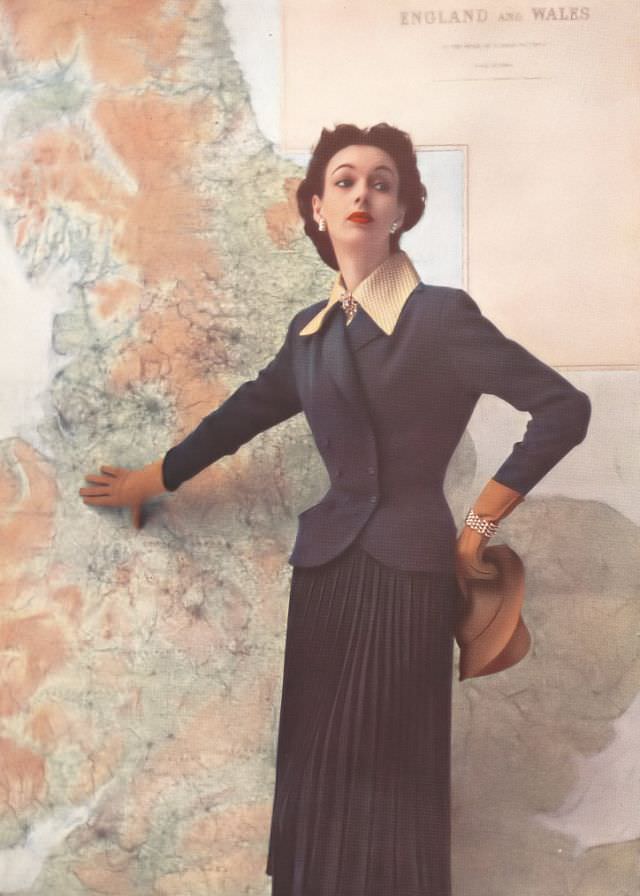
Poised against a wall-sized map labeled “England and Wales,” June Duncan turns her head with the composed, slightly theatrical confidence that defined early-1950s editorial fashion. The styling feels unmistakably Harper’s Bazaar UK: a controlled studio tableau where modern elegance is framed by the idea of travel, geography, and a wider world reopening after years of austerity. The color palette—deep navy set against warm map tones—adds a quiet drama that keeps the eye moving between figure and backdrop.
Her Marcus Spring suit is cut with the era’s disciplined tailoring, nipping the waist and sharpening the shoulders without losing softness in the line. A pale, oversized collar brightens the bodice and draws attention to the face, while the pleated skirt falls in crisp vertical rhythms that suggest motion even at rest. In her hand, a structured hat and coordinating Leathercraft accessories—gloves and jewelry accents—underscore the period’s emphasis on polish, practicality, and refined materials.
Fashion photography here works like storytelling: a model posed mid-gesture, one palm set to the map as if charting an itinerary, the other holding her hat as though just arrived or about to depart. The editorial idea merges couture and culture, selling not only clothes but a lifestyle of smart city days, country weekends, and well-planned journeys. For collectors of 1950s fashion, Harper’s Bazaar history, and British style, this image remains a rich example of how tailoring, accessories, and setting could combine into a single persuasive moment.