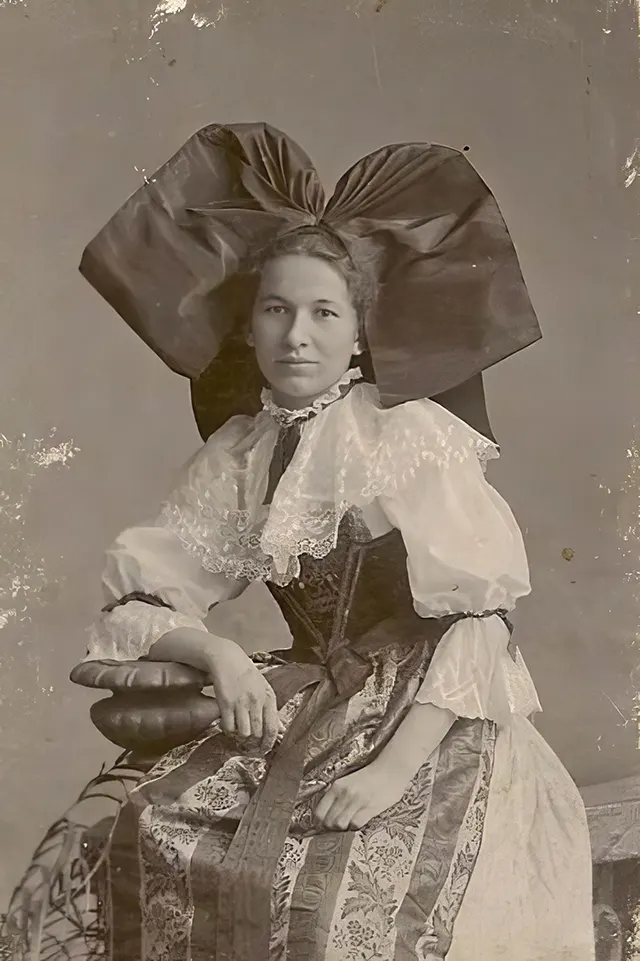
Towering above the sitter’s composed face, an oversized bow-like headdress dominates the studio portrait, instantly recognizable as the Schlupfkapp associated with Alsatian traditional dress. The fabric spreads outward in dramatic, winged folds, its dark sheen contrasting with the pale backdrop and drawing the eye to the careful arrangement of pleats and ties. Light wear and small blemishes on the print hint at a photograph that has traveled through time, handled and saved as a marker of memory and identity.
Lace at the high collar and the airy, translucent sleeves soften the formality, while the fitted bodice and patterned skirt panels speak to skilled craftsmanship and regional style. Her posture—one arm resting on a cushioned support, the other relaxed—matches the conventions of early studio photography, where clothing was as important as expression. Every texture, from delicate trimming to heavier woven textiles, reinforces how fashion functioned as a visual language of belonging.
Beyond its striking silhouette, the Schlupfkapp carries the weight of cultural heritage, signaling community ties and the pride of local tradition in Alsace. Such portraits were often more than personal keepsakes; they served as quiet declarations of continuity, especially in border regions where identities could be contested or reshaped. For historians of fashion and culture, this image offers a vivid, SEO-friendly window into Alsatian folk costume, women’s dress history, and the enduring symbolism of regional headwear.