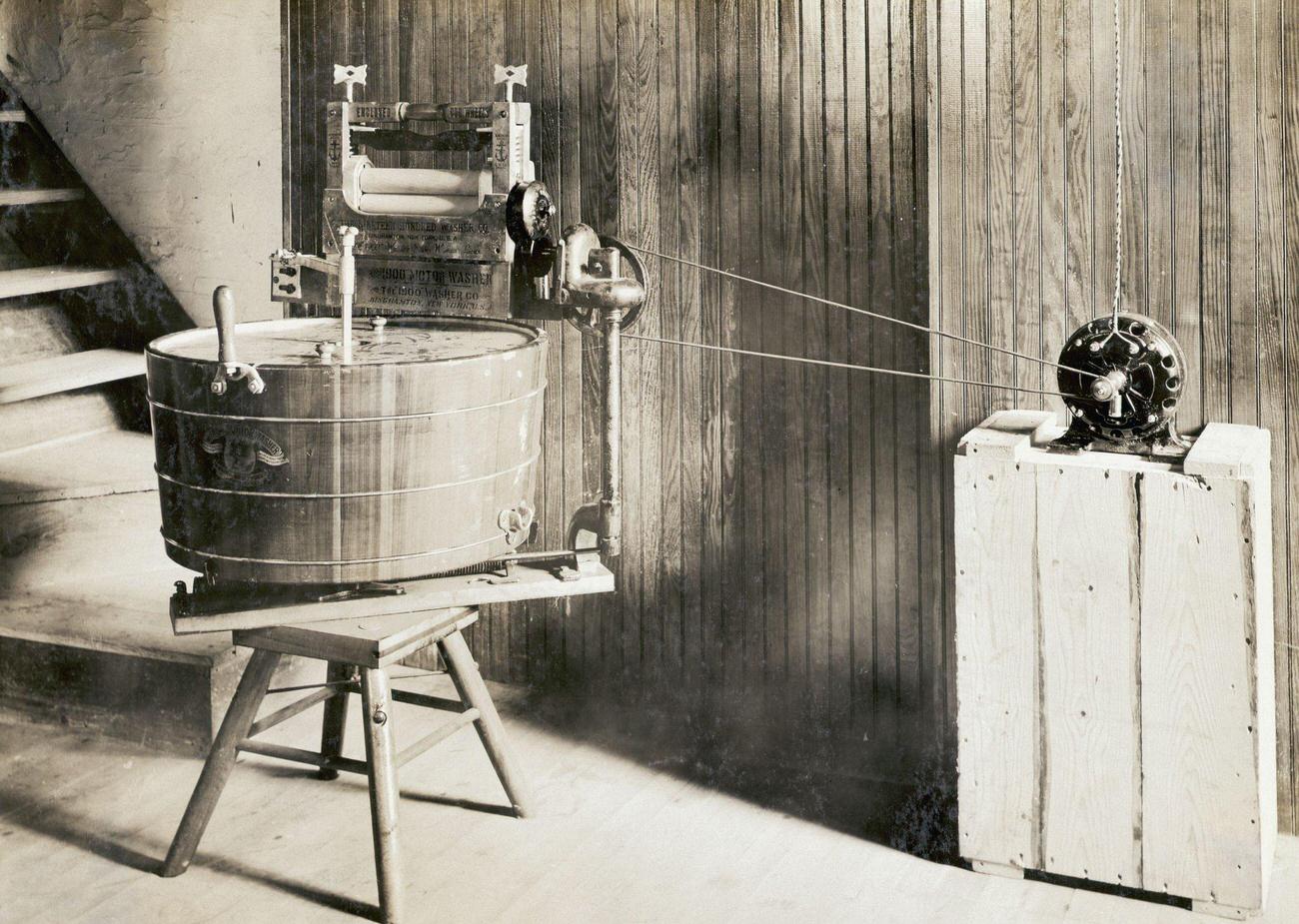
A stout wooden tub sits on a simple stand, paired with a metal wringer perched above it like a small piece of factory equipment brought indoors. Off to the right, a separate motor unit rests on a crate, its spinning wheel connected by a belt that stretches across the room to drive the washer. The plain plank wall and bare floor keep the focus on the machine itself—an invention meant to turn a hard day’s work into something more manageable.
What stands out is the transitional design: part hand-laundry tradition, part mechanized future. The wringer’s rollers promised quicker drying by squeezing out water, while the belt-driven motor suggests an era before compact, all-in-one appliances became standard. Even without people in the frame, you can almost hear the hum and whir that would have transformed washday rhythms in homes willing to adopt new technology.
For readers interested in the history of household inventions, this motor-driven washing machine and wringer illustrates early consumer electrification and the steady march toward modern convenience. It’s a reminder that “labor-saving” devices often arrived in stages—add a motor here, a wringer there—before the familiar automatic washing machine took over. As a historical photo, it offers a crisp look at how engineering, domestic life, and everyday necessity met in the laundry room.