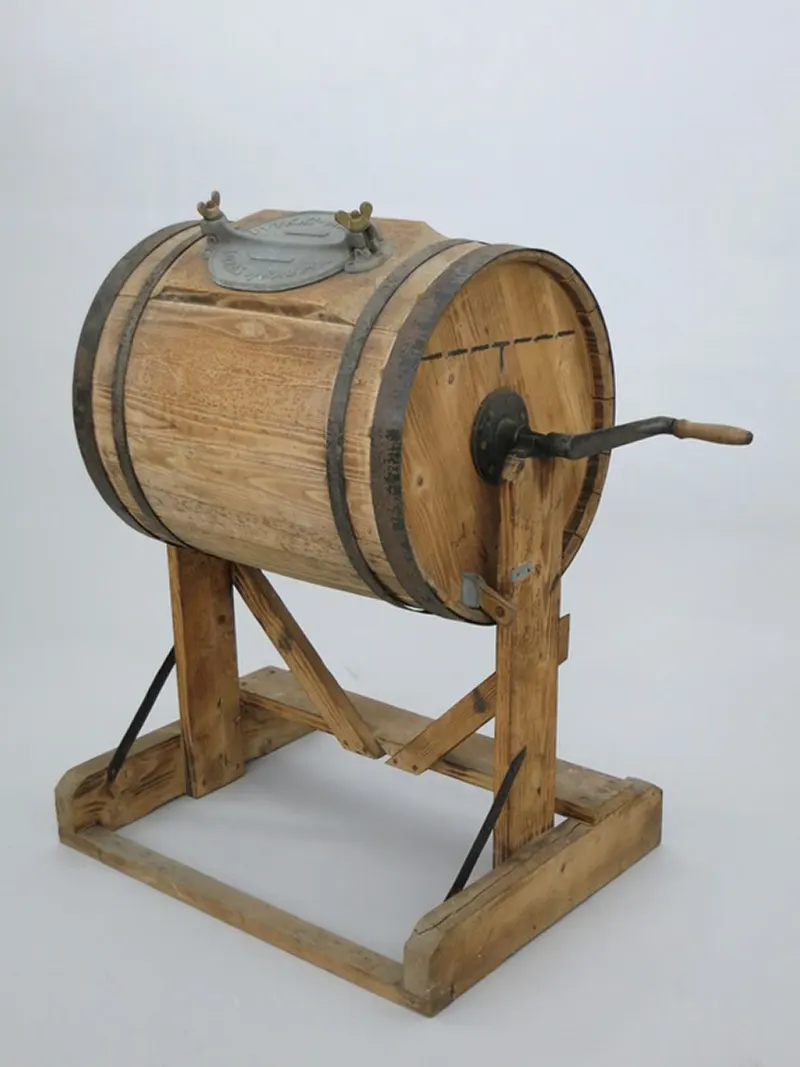
Barrel-shaped and sturdily braced on a simple wooden stand, this crank-operated washing machine looks like a clever cousin of everyday cooperage. Metal bands cinch the drum, a lidded opening sits on top for loading and water, and a hand crank projects from the side to set the whole cylinder turning. The plain, hardworking materials—wood, iron, and practical joinery—signal an invention meant to survive years of weekly use.
Hand power did the job long before electric motors took over laundry rooms, and devices like this aimed to trade backbreaking scrubbing for steady, repeatable motion. Turning the crank would tumble wet fabric inside the drum, encouraging water and soap to work through the fibers with less direct strain on the washer’s hands. It’s an early example of domestic engineering: not glamorous, but quietly transformative for household labor.
For readers interested in the history of inventions and the evolution of washing machines, the photo highlights a transitional moment between washboards and modern appliances. Every feature speaks to efficiency—contained washing, fewer splashes, and a mechanism that multiplies effort through rotation. Seen up close, it’s a reminder that “innovation” often arrived first as a well-made tool that simply made ordinary life a little more manageable.