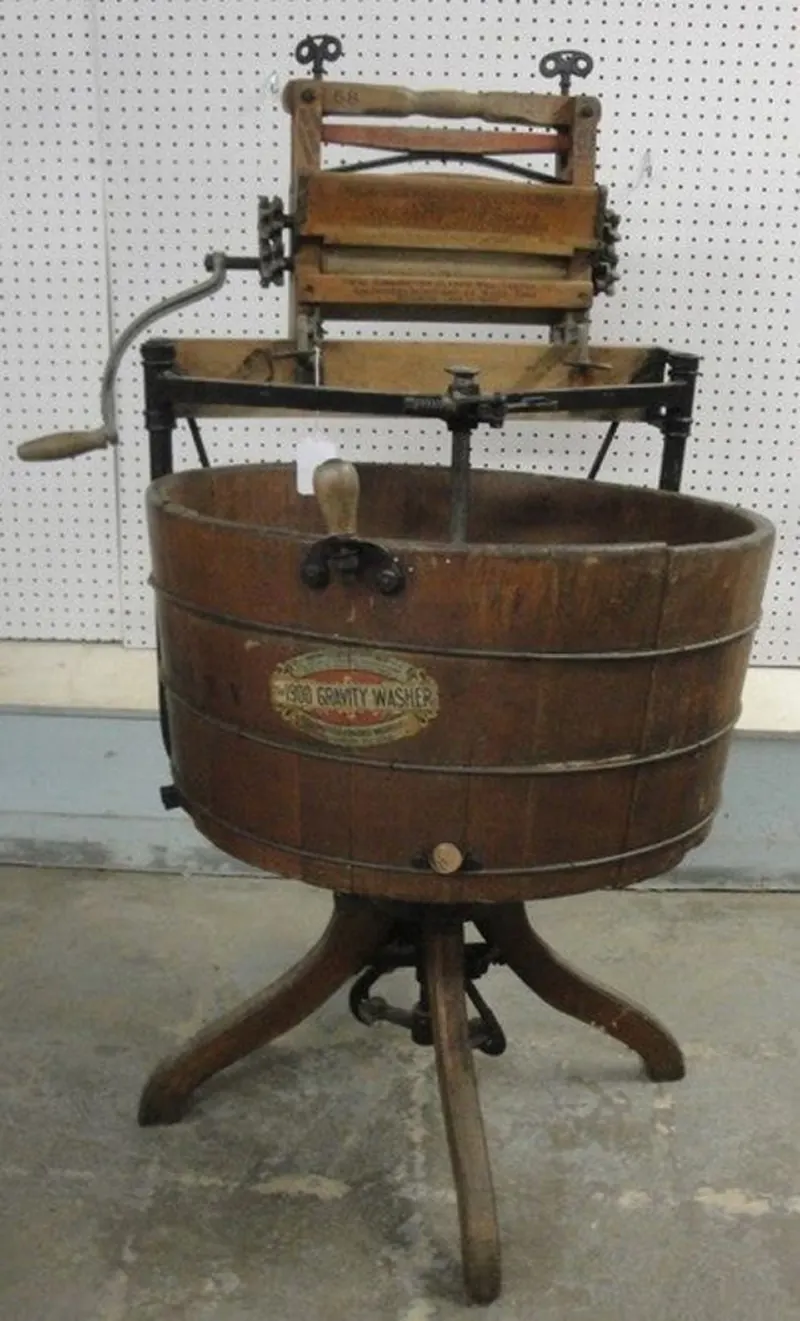
Wood staves bound with metal hoops form a deep tub perched on sturdy legs, while a rack of rollers and gears rises above it like a small piece of workshop equipment. A hand crank on the side hints at the rhythm of work: turning the handle to agitate water and guide damp fabric through the wringer. Even at a glance, the “Gravity Washer” nameplate signals an era when household inventions were marketed with bold promises of smarter, easier labor.
Set against the title “Gravity Washer, 1900,” the machine reads as a bridge between washboard-and-tub traditions and the mechanized laundry appliances that would soon follow. The wringer assembly—tightening screws, exposed cogs, and a practical wooden frame—suggests a design meant to press water out efficiently, saving time and muscle. Its materials tell their own story too: durable timber and iron hardware built for repeated use, repair, and the hard realities of everyday cleaning.
Inventions like this were rarely glamorous, yet they reshaped domestic life by turning exhausting tasks into repeatable routines powered by simple mechanics. For collectors and social historians, early washing machines offer a tangible record of how ingenuity entered the home long before electric motors became standard. If you’re exploring antique laundry equipment or turn-of-the-century household technology, this Gravity Washer stands as a compelling reminder that “modern convenience” arrived one crank at a time.