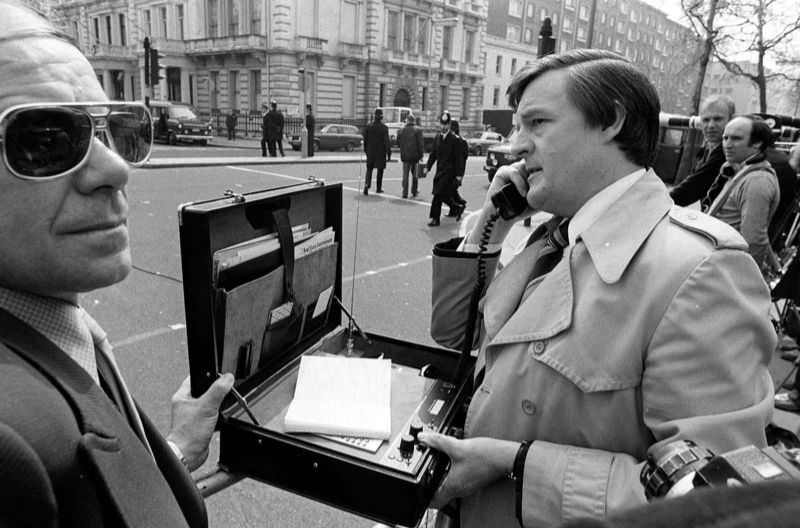
On a busy Kensington street in London in 1983, a reporter stands mid-conversation with a handset pressed to his ear, looking every bit like someone trying to file a story before the moment slips away. The technology at the center of the scene isn’t pocket-sized or discreet; it’s a hard-edged briefcase packed with cables, paperwork, and the kind of hardware that made “mobile” an aspiration rather than a convenience. Around him, traffic, pedestrians, and watchful onlookers turn an ordinary corner into a small stage for a new era of communication.
The briefcase phone is the real character here, a transitional invention bridging radio-era equipment and the personal mobile phones that would later reshape work and daily life. Its bulky form hints at limited battery life, heavy components, and the privilege of access—tools like this were typically used by professionals who needed speed more than comfort. Details like the reporter’s trench coat, the handheld handset cord, and the paperwork tucked inside the case underline how reporting once depended on physical kits and improvised street-side offices.
Kensington’s stone-fronted buildings and the steady flow of London life provide a fitting backdrop for a story about modernity arriving in layers rather than overnight. For readers interested in the history of mobile phones, British journalism, or 1980s technology, the image offers a vivid reminder that innovation often starts out awkward, expensive, and conspicuous. It’s a snapshot of inventions in motion—where the urgency of news meets the early promise of being connected from anywhere.