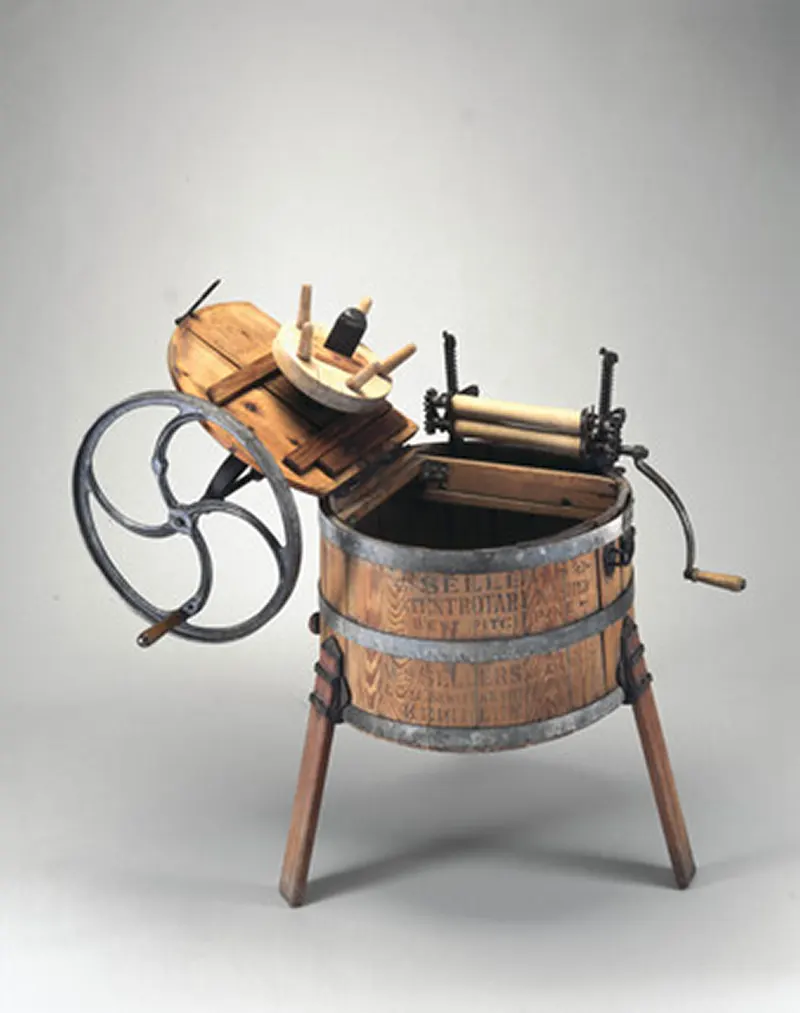
Wood staves banded with metal hoops give this 1890 washing machine the look of a sturdy barrel, but its purpose was thoroughly modern: to take some of the grind out of laundry day. A large spoked wheel and crank sit to one side, hinting at the hand-powered rhythm that once drove the mechanism, while the open top reveals a simple, practical interior meant for churning cloth through soapy water.
In an era when “inventions” often arrived as clever adaptations of familiar materials, the design reads like workshop ingenuity translated into household labor. The machine’s legs lift the tub off the floor for easier use, and the rollers and gearing suggest a coordinated system for agitating and pressing fabric—an early step toward the automated washers that would later redefine domestic work.
Seen up close, it’s easy to imagine the sound of turning metal against wood and the steady pace required to keep everything moving. For readers exploring the history of washing machines, 19th-century technology, and everyday life in the late Victorian period, this photograph offers a vivid reminder that progress was often measured in small mechanical advantages—earned one crank at a time.