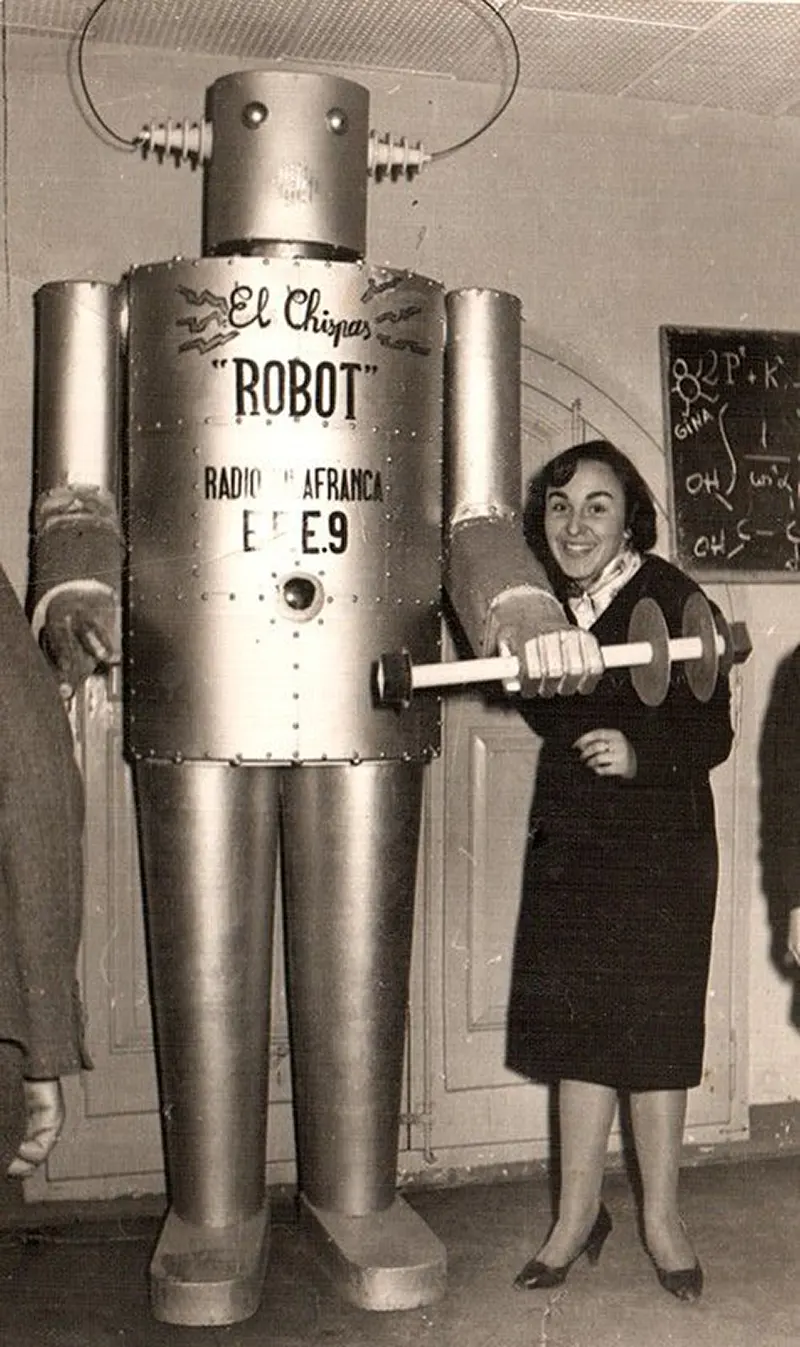
Steel and optimism collide in this striking 1953 scene from Spain, where a towering homemade automaton labeled “El Chispas ‘Robot’” stands like a visitor from the future. Its riveted metal body, simple round eyes, and antenna-like headpiece evoke the classic mid-century idea of what a robot should look like—part radio equipment, part carnival marvel. The lettering across its chest, including “Radio” and other markings, hints at a world where electronics and imagination were becoming inseparable in the public mind.
Beside the machine, a smiling woman grips a barbell-like handle held out from the robot’s arm, turning the encounter into a playful demonstration rather than a cold technical display. The contrast is memorable: heavy industrial forms and smooth cylindrical limbs against the everyday elegance of mid-century clothing and a casual indoor setting. On the wall, chalk scribbles and symbols reinforce the workshop or classroom atmosphere, suggesting tinkering, experimenting, and the kind of practical curiosity that powered so many postwar inventions.
El Chispas Robot belongs to that fascinating moment when “robot” meant spectacle as much as science, and when bold prototypes helped translate futuristic dreams into something you could stand next to and touch. For readers drawn to Spanish history, retro technology, and early robotics, the photograph offers an irresistible snapshot of invention culture—proud, theatrical, and hands-on. It’s a reminder that the road to modern automation was paved not only by laboratories, but also by showmanship, local ingenuity, and a public eager to meet tomorrow face-to-face.