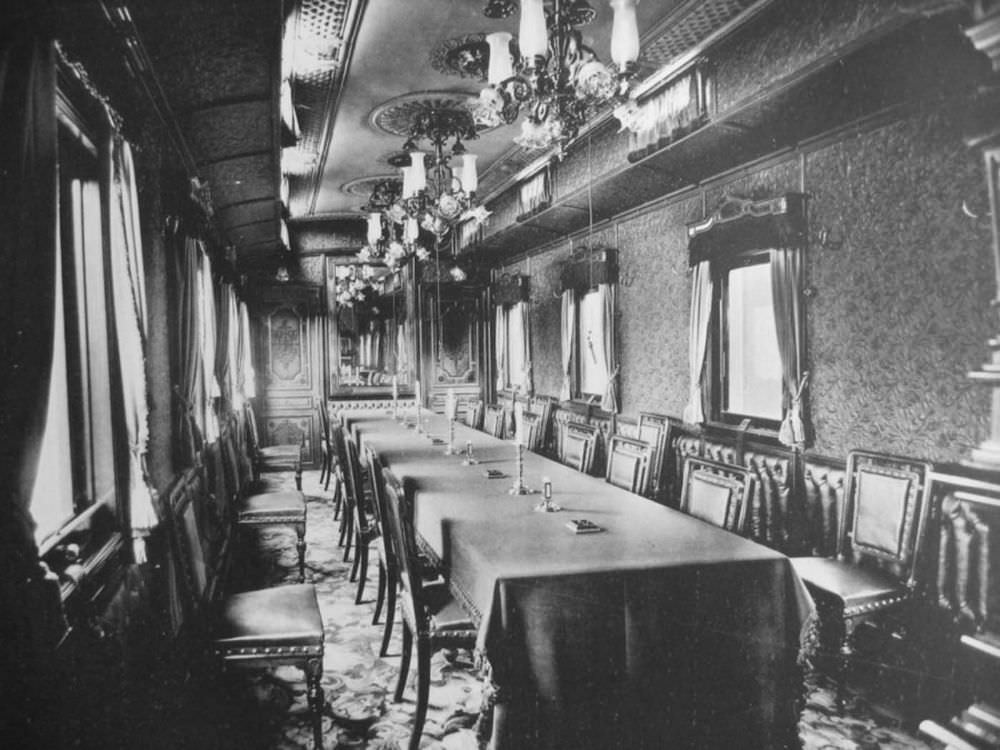
Gold-toned chandeliers and patterned ceiling panels draw the eye down a long, narrow dining-car, where a single table stretches almost the full length of the carriage. Crisp linen, evenly spaced place settings, and high-backed chairs suggest a space designed for ceremony as much as comfort, even while the train was in motion. Along one side, tall windows with gathered curtains promise passing scenery—an ever-changing backdrop to a meal served in measured elegance.
The title, “The dining-car on the Imperial train,” hints at a world where rail travel was both technological triumph and rolling theatre of status. Carved woodwork, upholstered seating, and decorative wall panels show how engineering and craftsmanship were fused to make a private salon on rails. It’s a telling reminder that the dining car was not merely a convenience but an invention in social logistics, turning distance into an occasion.
Seen today, this historic railway interior reads like a quiet stage set awaiting its guests, with symmetry and soft light reinforcing the ritual of formal dining. Details such as the table’s central line of small fixtures and the orderly arrangement of chairs evoke the disciplined service and etiquette expected aboard an elite train. For readers exploring the history of inventions, luxury travel, and classic railways, the image offers a vivid glimpse of how modern mobility once arrived wrapped in tradition and refined design.