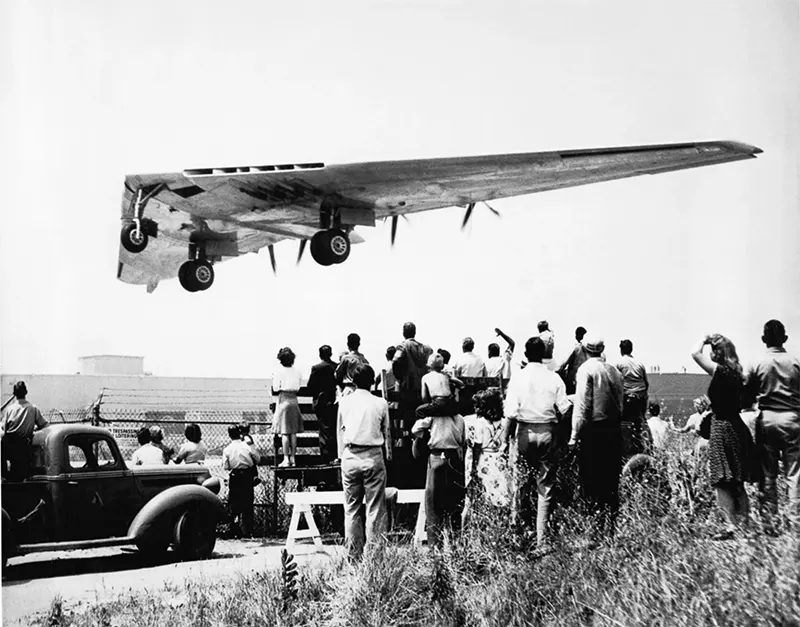
Airfield spectators cluster along a fence line, craning their necks as the XB-35 rises above them on its maiden flight. The aircraft’s broad flying-wing silhouette dominates the sky, landing gear still down as it gathers lift, while onlookers point upward and shade their eyes. Even the parked car at the edge of the scene feels like part of the audience, grounding the moment in everyday life as something extraordinary passes overhead.
What makes the scene so compelling is the contrast between ordinary people in shirtsleeves and dresses and a machine that looks almost futuristic. The XB-35’s clean, tailless form suggests an era when radical aerodynamic ideas were moving from drawing boards to runways, and the crowd’s attention tells you this wasn’t just another test hop. It’s a snapshot of public curiosity and national faith in engineering—an “inventions” story written in aluminum, rivets, and propellers.
For readers drawn to aviation history, experimental aircraft, and flying-wing design, this image offers a vivid sense of scale and anticipation. The low pass over the viewing area hints at the careful choreography of a first flight, when every second aloft is watched, judged, and remembered. Long after the roar fades, the photograph keeps the excitement intact: a community gathered to witness innovation leave the ground.