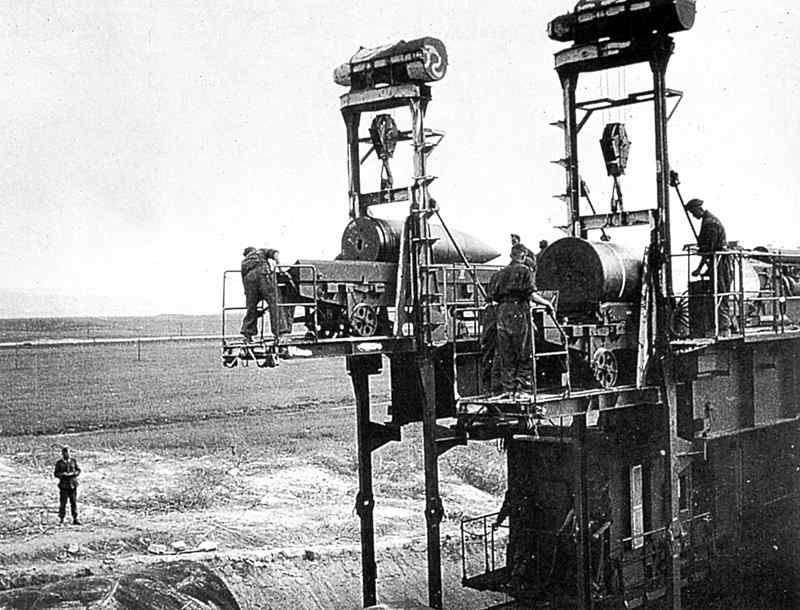
Towering above the flat landscape, an immense piece of machinery dominates the scene while workers cling to platforms and ladders like ants on scaffolding. The stark scale in this historical photo hints at the obsession with outsized artillery that produced the Gustav Gun, a weapon engineered to be as much a logistical project as a battlefield tool. Even without close-up detail, the industrial forms—heavy housings, cranes, and rail-mounted structures—suggest the kind of specialized equipment required just to handle a single component.
What makes the Gustav Gun so unsettling as a relic of Nazi engineering inventions is the way it compresses ambition, technical prowess, and destructive intent into one colossal system. The men in uniform provide the only reliable measure of size, emphasizing how such super-weapons demanded teams of operators, support crews, and extensive preparation rather than quick, flexible firepower. Seen this way, the photograph becomes a study in wartime engineering culture: precision metalwork and careful assembly serving a strategy that prized spectacle and brute force.
For readers searching for World War II history, German super-weapons, or the story behind the Gustav Gun, this image offers a grounded glimpse of how extraordinary concepts translated into real, physical infrastructure. It invites questions about transport, maintenance, and the human labor behind the machine—details often lost when a weapon is remembered only for its statistics. As a WordPress feature on historical inventions, it’s a reminder that “innovation” in wartime can be measured not just in ingenuity, but in the scale of resources and lives marshaled to make the impossible operational.