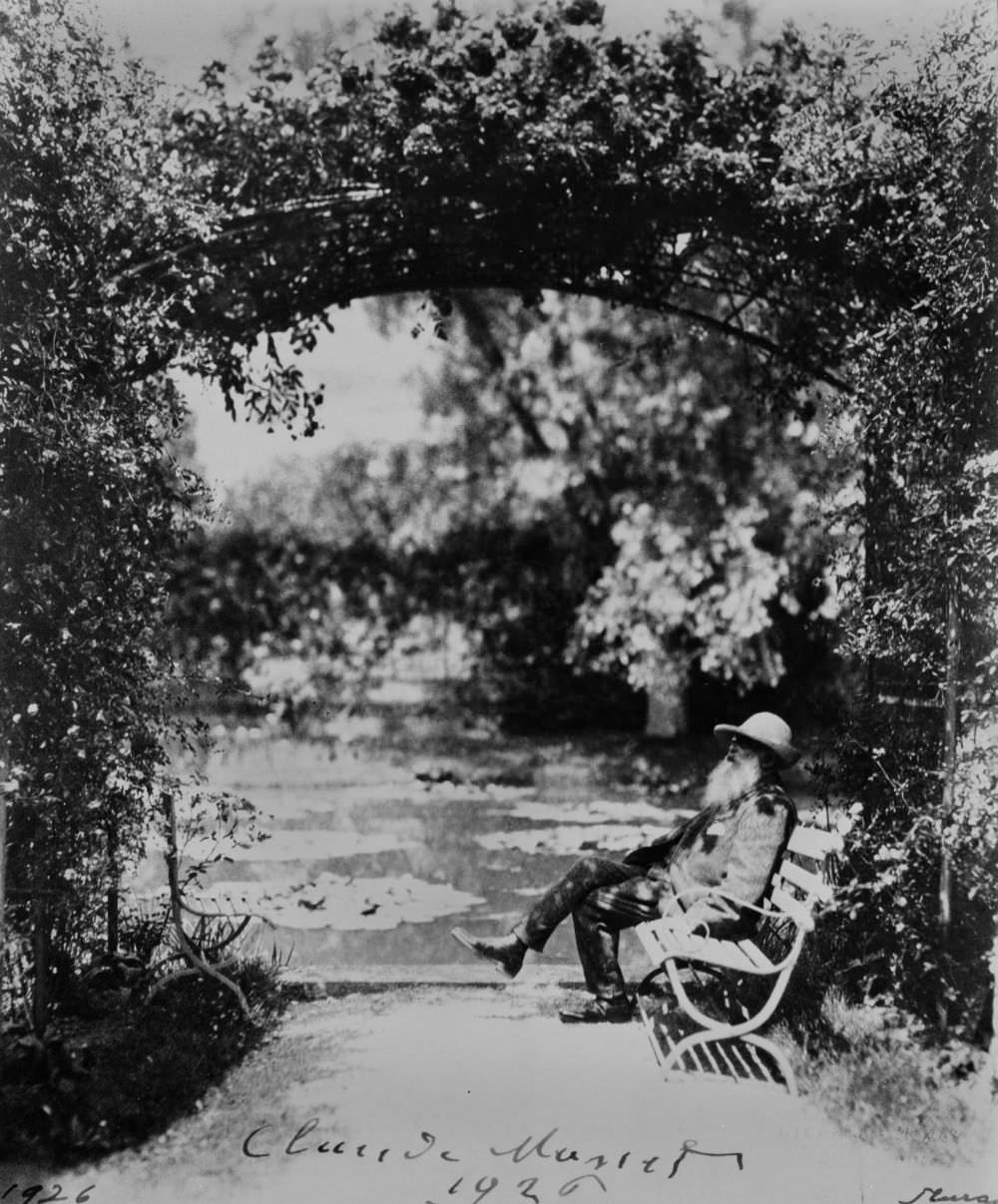
Beneath a leafy arch that frames the scene like a living proscenium, a quiet garden path leads the eye toward still water scattered with lily pads. In the shade at right, an elderly, bearded man rests on a simple bench, hat tipped forward, seemingly absorbed by the hush of the surroundings. The soft blur of foliage and reflections turns the moment into something almost painterly, echoing the very atmosphere associated with Giverny.
Giverny was more than a backdrop for Claude Monet—it was a carefully tended world where ponds, plantings, and shifting light became daily companions and enduring subjects. The arched greenery and water garden suggest the kind of intimate viewpoints that fed his fascination with reflection, season, and weather, where a single corner could yield endless variations. Even without the palette and easel in view, the scene reads as a working sanctuary: nature arranged, observed, and returned to again and again.
For visitors and art lovers searching for the roots of Impressionism, this historical image offers a grounded glimpse into the setting behind the famous Giverny garden artworks. It invites you to linger on details—dappled shadows, layered vegetation, and the calm surface of the pond—and imagine how such motifs migrated from lived experience into canvases. As part of a WordPress post on Claude Monet’s studio and gardens, it helps connect the man, the place, and the visual language that continues to define Giverny in art history.