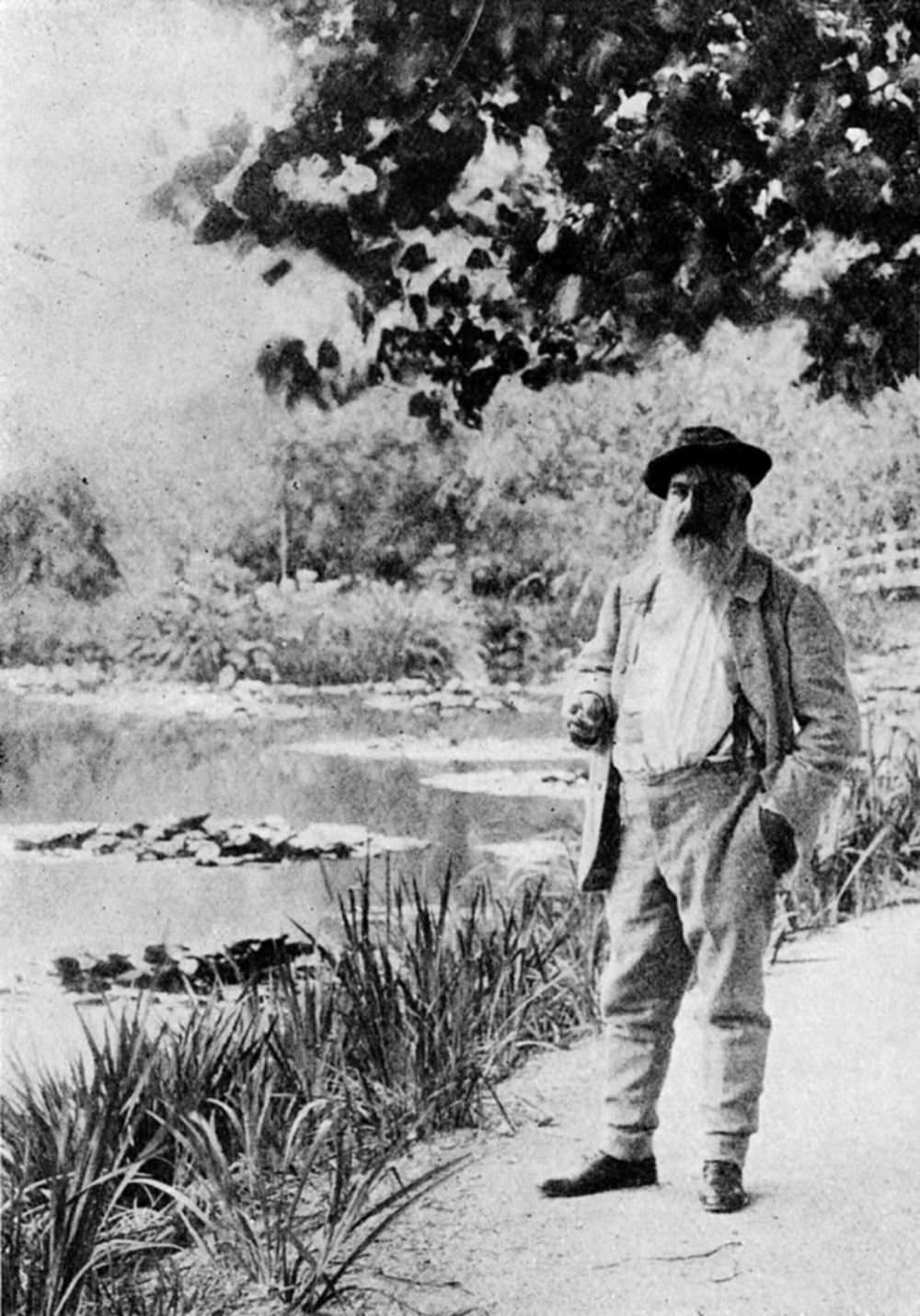
Beneath a canopy of leaves, a bearded man in a broad-brimmed hat pauses beside a calm pond, where lily pads drift near the bank and tall grasses lean toward the water. The soft blur of the old print turns foliage into a mottled tapestry of light and shadow, echoing the very visual poetry that made Giverny synonymous with Claude Monet’s world. Even without architectural details in view, the scene carries the unmistakable hush of a cultivated garden—part wilderness, part deliberate design.
The water’s surface becomes the quiet protagonist here, reflecting the garden’s density and suggesting the painterly studio-outdoors that defined Monet’s practice. Reeds, shrubs, and overhanging branches frame the pond like a natural proscenium, inviting the eye to wander the way an Impressionist brush might: from texture to texture, from dark leaf-mass to pale bloom. As a historical photo, it reads like a behind-the-scenes glimpse into the living source material that later reappeared on canvas as atmosphere, color, and repeated motif.
For readers exploring Claude Monet’s personal Eden, this image pairs beautifully with artworks inspired by the studio and gardens of Giverny, grounding those paintings in a tangible landscape. It’s an SEO-friendly window into Monet’s creative environment—water lilies, garden paths, and the intimate scale of a private sanctuary shaped for looking closely. Let it set the mood for a deeper dive into Giverny artworks, where the boundary between garden and studio all but disappears.