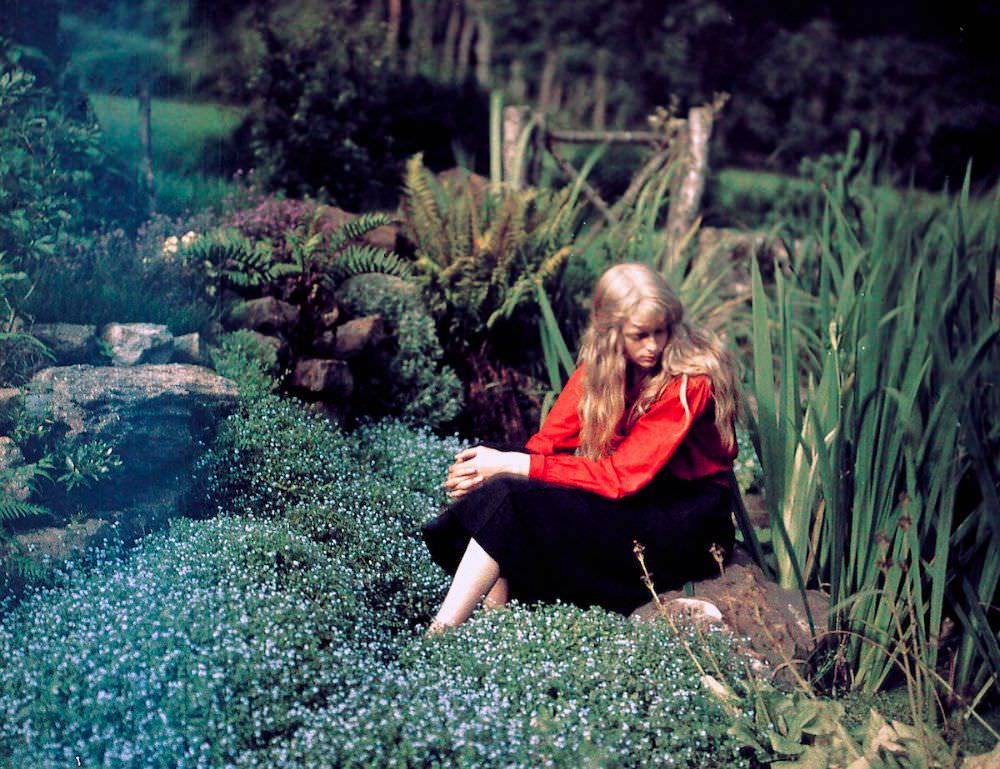
Against a lush spill of greenery and tiny blue blossoms, Christina sits quietly at the edge of a garden-like landscape, her vivid red blouse pulling the eye the way a poppy does in tall grass. Long, light hair falls over her shoulders as she turns slightly away, hands clasped and posture tucked in, creating a moment that feels private rather than posed. The colorization gives the scene a soft, painterly depth, with cool blues and greens balancing the warmth of her clothing.
Details in the background—stones, ferns, and tall reeds near what looks like damp ground—suggest a cultivated outdoor space where nature has been encouraged to grow thick and wild. The early-20th-century mood comes through in the modest silhouette and restrained demeanor, even as the added color makes the setting feel immediate and modern to today’s viewer. It’s a portrait that leans on atmosphere: sunlight filtered through foliage, textures layered from leaf to rock, and a calm expression caught mid-thought.
“Christina in red, 1913” works as more than a simple figure study; it’s a small window into how historical photography, once monochrome, can be reimagined through careful color restoration. The result invites closer looking—at fabric, at plant life, at the interplay between a solitary subject and the natural world around her—while keeping the mystery intact. For readers drawn to vintage portraits, colorized photographs, and the quiet poetry of everyday moments, this image offers a gentle, enduring pull.