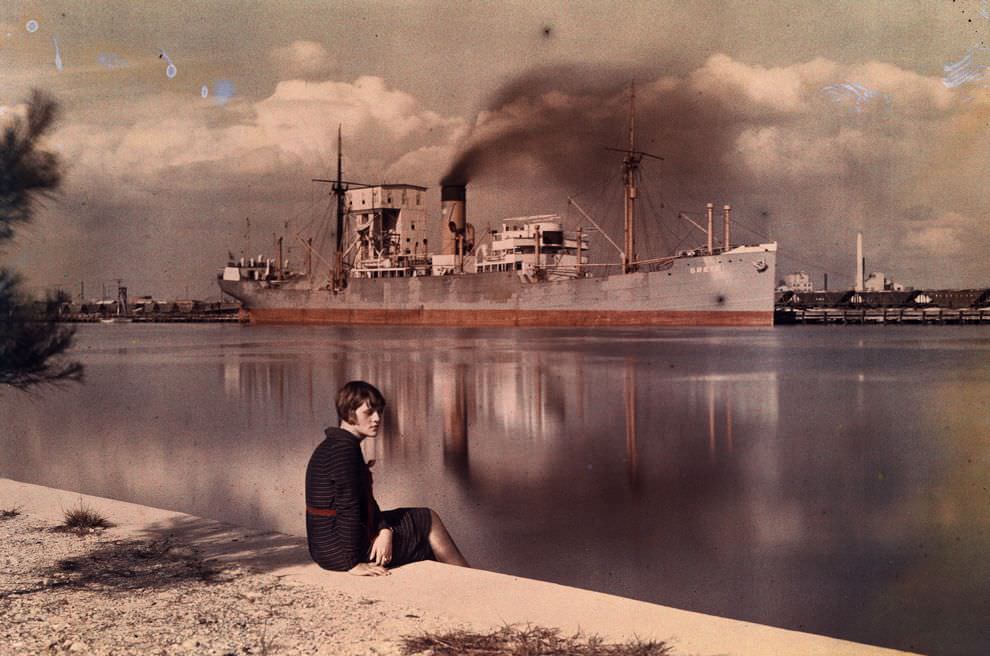
At the water’s edge, a lone woman sits on a pale embankment, her posture relaxed yet watchful as she faces the quiet harbor. The colorization lends warmth to the scene: soft sky tones, gentle reflections on the smooth surface, and the dark bands of her dress set against the light shoreline. It’s an intimate moment of stillness, the kind found in old waterfronts where everyday life paused to follow the movement of ships.
Across the channel, a freighter approaches with a low plume of smoke trailing from its stack, its hull and rigging rising above the calm like a moving piece of industry. The vessel’s reflection stretches across the water, broken only by subtle ripples, while distant piers and harbor structures sit on the horizon. Together, the seated figure and the incoming ship create a striking contrast—human scale against maritime machinery—capturing the rhythm of port life in 1930.
Scenes like this speak to an era when freighters were lifelines for goods and work, and harbors doubled as public spaces for waiting, watching, and thinking. The photograph’s restored color draws the viewer closer to textures—sand, fabric, steel, and smoke—making the past feel immediate without needing a specific name or place. For anyone searching for a 1930 harbor photo, vintage freighter imagery, or a colorized historical waterfront scene, this post offers a quiet, evocative glimpse of a ship’s arrival and a person’s unspoken story.