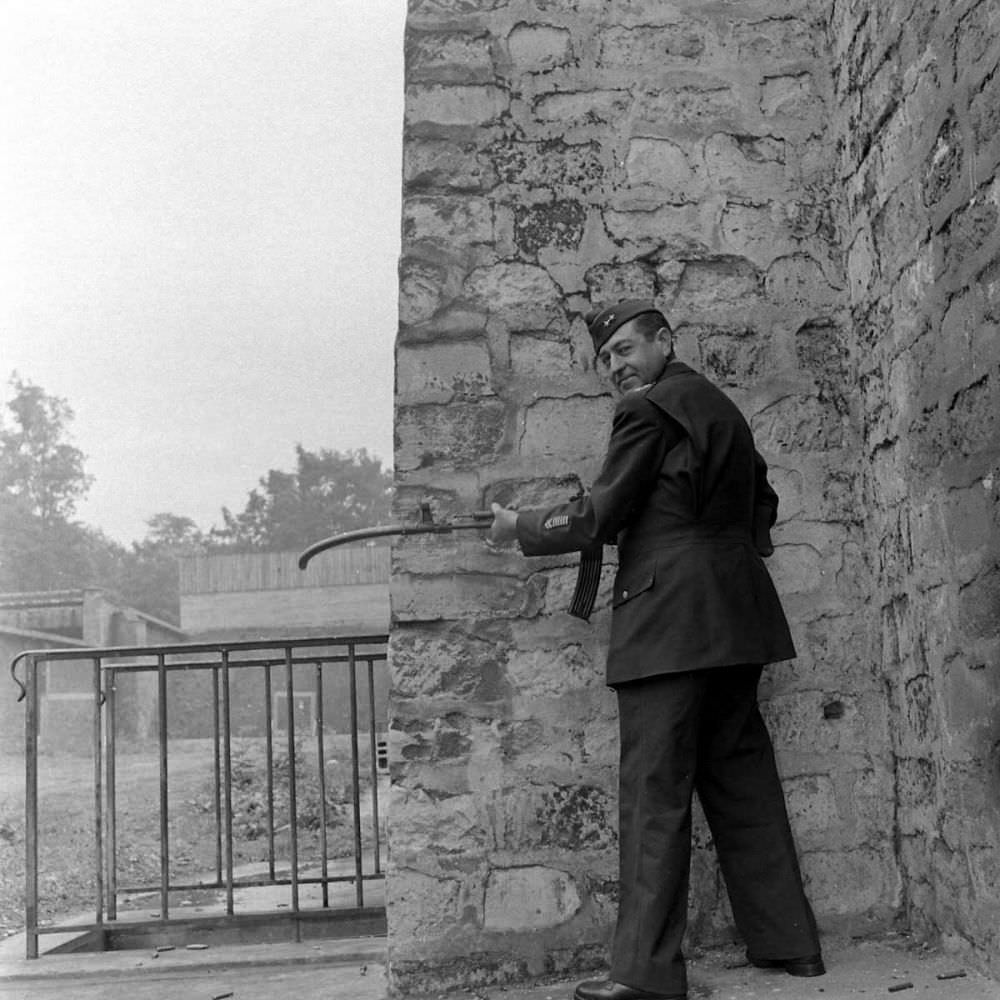
Half-hidden behind a rough stone wall, a uniformed soldier leans out just enough to aim a rifle fitted with an unmistakably curved barrel attachment. The angle of his stance tells the story: stay protected, keep the weapon trained, and try to reach what’s waiting beyond the corner. In the stark tones of the period photo, masonry, railings, and open space frame an improvised moment of experimentation that feels part battlefield practicality, part engineering dare.
Krummlauf—literally a “crooked barrel”—was one of WWII’s most astonishing weapon inventions, designed to let a shooter fire around obstacles without exposing the body. The concept promised a tactical advantage in tight urban fighting, trenches, and fortified positions, where a few inches of cover could mean survival. Yet the very thing that made it intriguing also made it problematic: forcing a bullet through a bend strains the metal, distorts the shot, and turns reliability into a constant question.
What makes this scene so compelling is how clearly it captures wartime ingenuity at the edge of feasibility, when urgent needs pushed designers to challenge the limits of physics and materials. For readers fascinated by World War II technology, experimental firearms, and the strange cul-de-sacs of military innovation, the Krummlauf stands out as a case study in bold ideas that struggled in real-world conditions. The photo invites you to imagine the test fires, the hopes pinned on a clever solution, and the hard lessons learned when “curving shots” met the unforgiving realities of combat.