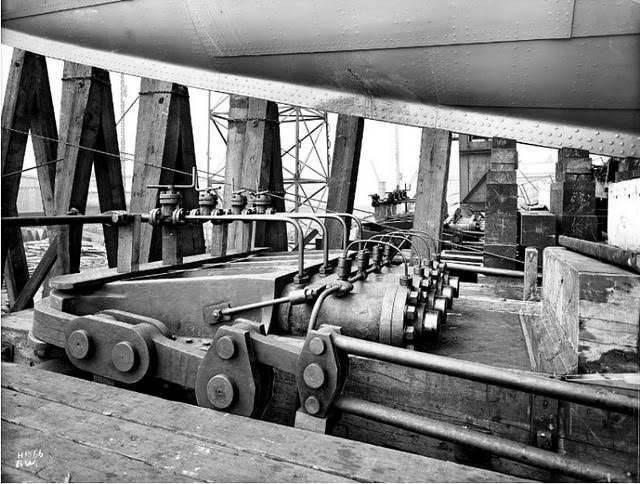
Steel plates and dense ranks of rivets dominate the view, while heavy hydraulic-looking gear and piping sit bolted to a timbered platform beside a vast hull. The camera lingers on the practical heart of shipbuilding—clamps, valves, and mechanisms engineered to shape metal on an industrial scale—hinting at the sheer force required to assemble an ocean liner meant to defy the Atlantic. In the background, skeletal supports and yard structures frame the scene like a temporary cathedral built for one purpose: turning raw materials into a floating city.
Beneath the romance that later surrounded the Titanic, construction was a story of inventions and process—of precision fastenings, pressurized systems, and carefully staged assembly that pushed early 20th-century engineering to its limits. Images like this help explain why the ship’s builders spoke with such confidence: strength could be measured in plate thickness, joint spacing, and the disciplined repetition of industrial labor. Every visible bolt and rivet reads as a promise that modern technology had tamed risk, even if history would later challenge that belief.
Searchers looking for Titanic construction photos, shipyard engineering, or the innovations behind the “unsinkable” reputation will find plenty to study in this gritty, close-up perspective. Rather than focusing on glamorous interiors, the photograph invites attention to the infrastructure—tools and machinery that rarely appear in popular retellings but made the vessel possible. It’s a reminder that fame begins long before a launch, in workshops and yards where invention is measured in metal, pressure, and patience.