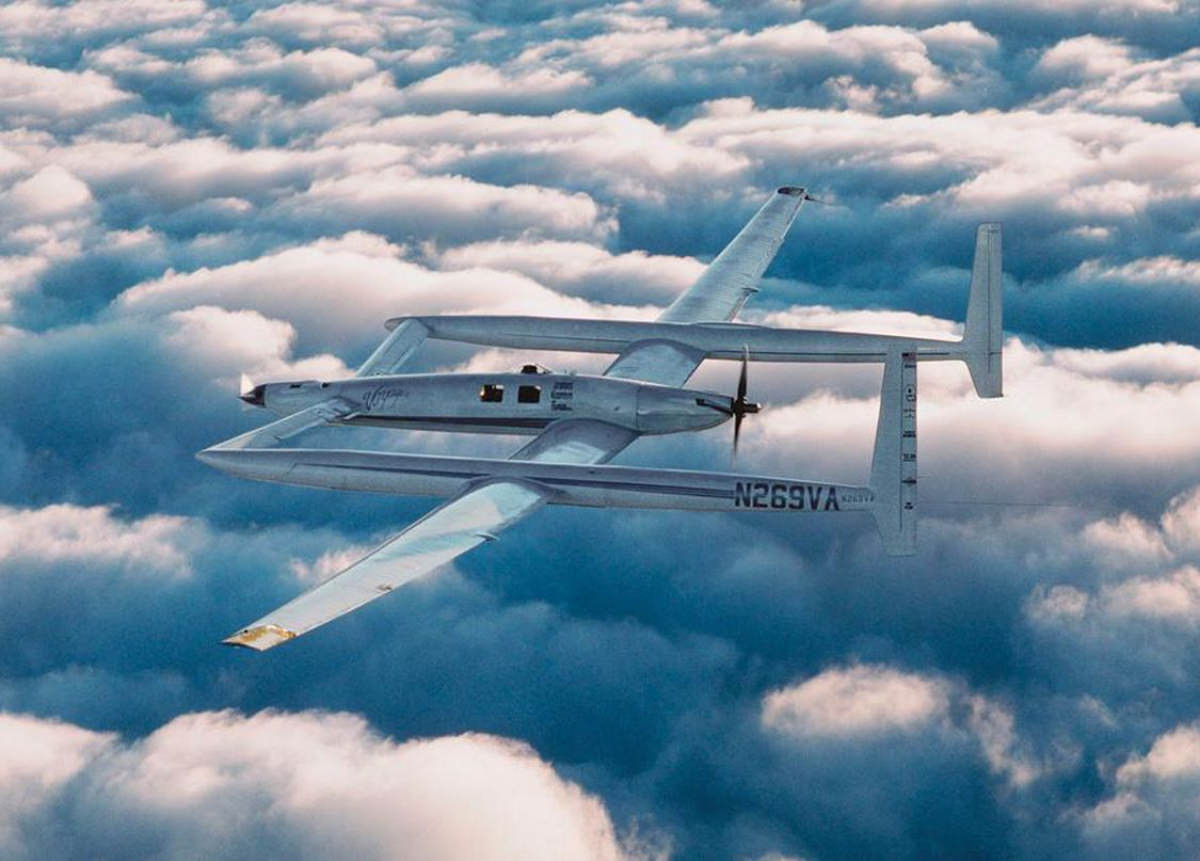
High above a rolling sea of cloud tops, the Rutan Voyager glides with an almost sailplane-like elegance, its long, slender wings stretching wide and its twin-boom tail framing the sky behind it. The aircraft’s unusual proportions hint at a singular purpose: extreme efficiency, wringing as much distance as possible from every ounce of fuel while keeping the airframe light and stable. Even the clean, spare lines of the fuselage and the quiet confidence of the profile speak to experimental aviation at its most ambitious.
Rutan Voyager’s trailblazing nonstop, unrefueled flight around the world remains one of the most compelling chapters in modern aerospace history, not because of brute speed, but because of endurance engineering. The design philosophy visible here—minimal drag, carefully balanced lift, and a configuration built for long-duration flight—embodies the inventive spirit behind record-setting aircraft. For readers interested in aviation innovations, this photo serves as a visual shorthand for the era’s push to prove what careful design and relentless planning could accomplish.
Seen in this archival view, the Voyager becomes more than a machine in flight; it becomes a symbol of human persistence suspended between sunlight and storm. The layered clouds below suggest vast distances and changing weather, the very conditions that make a no-rest, no-refuel circumnavigation so daunting. As a WordPress feature image, it pairs beautifully with a story about the Rutan Voyager, experimental aircraft design, and the milestone achievement of flying around the world without stopping for fuel.