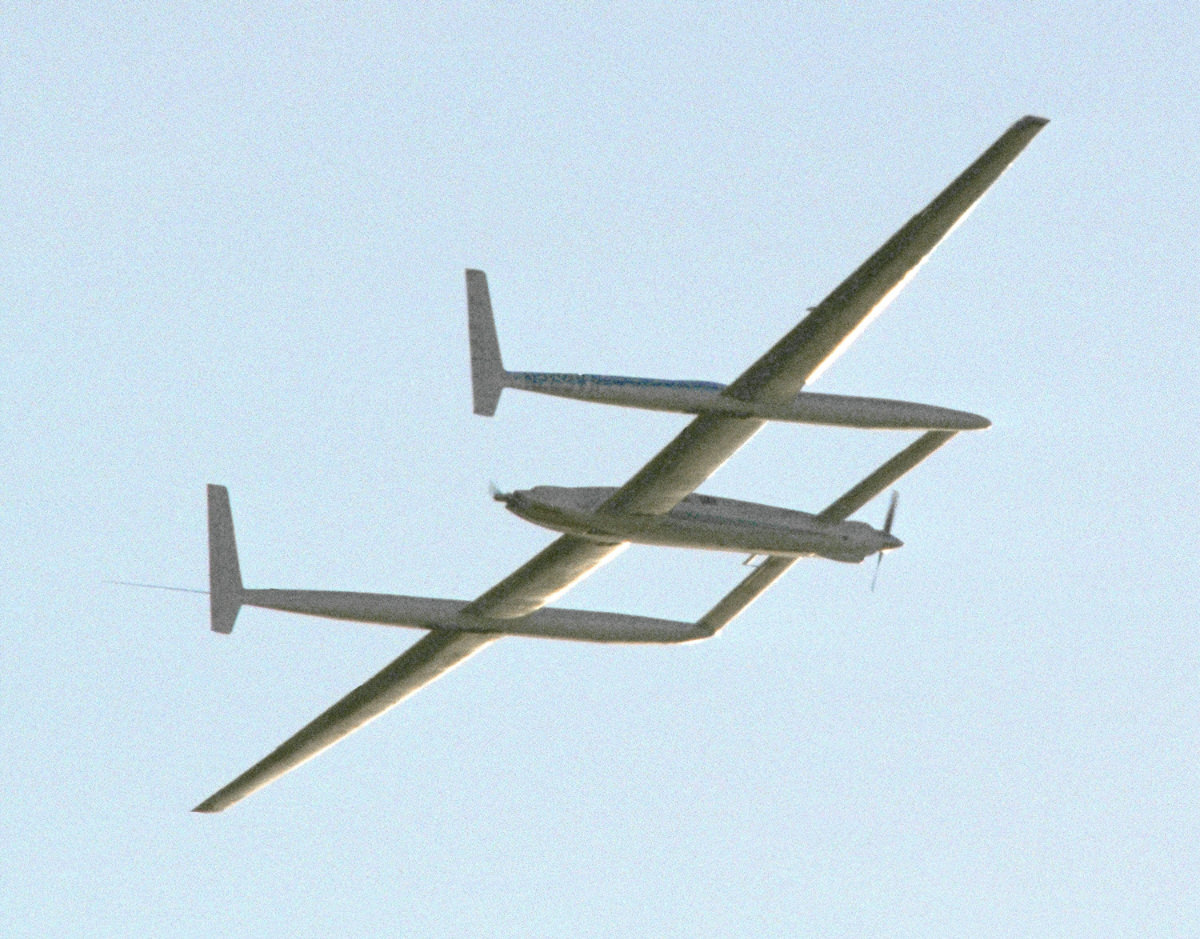
High above the ground, the Rutan Voyager cuts a delicate silhouette against an open sky, its long, slender wings and twin-boom layout hinting at a machine engineered for endurance rather than speed. The unusual proportions—lightweight structure, expansive span, and a narrow fuselage—speak to a singular purpose: stretching every drop of fuel into maximum distance. Even in a simple flight view, the aircraft’s form reads like a manifesto of efficiency.
What made the Voyager’s nonstop, no-refuel journey around the world so captivating was the way it reframed aviation’s limits through invention and discipline. Instead of relying on aerial refueling or frequent landings, the challenge demanded meticulous aerodynamic design, careful weight management, and systems built to run reliably for an extreme duration. The result became an emblem of experimental aircraft ingenuity, where engineering choices were inseparable from human stamina.
For readers drawn to aerospace history, record-setting flights, and the evolution of long-range aircraft, this photo is a doorway into a remarkable chapter of modern aviation. It invites a closer look at how innovative airframe design and efficiency-driven thinking can turn an audacious idea into a real-world accomplishment. In the Voyager’s quiet glide, you can almost feel the persistence behind that trailblazing circumnavigation—one continuous line across the globe, without rest or refuel.