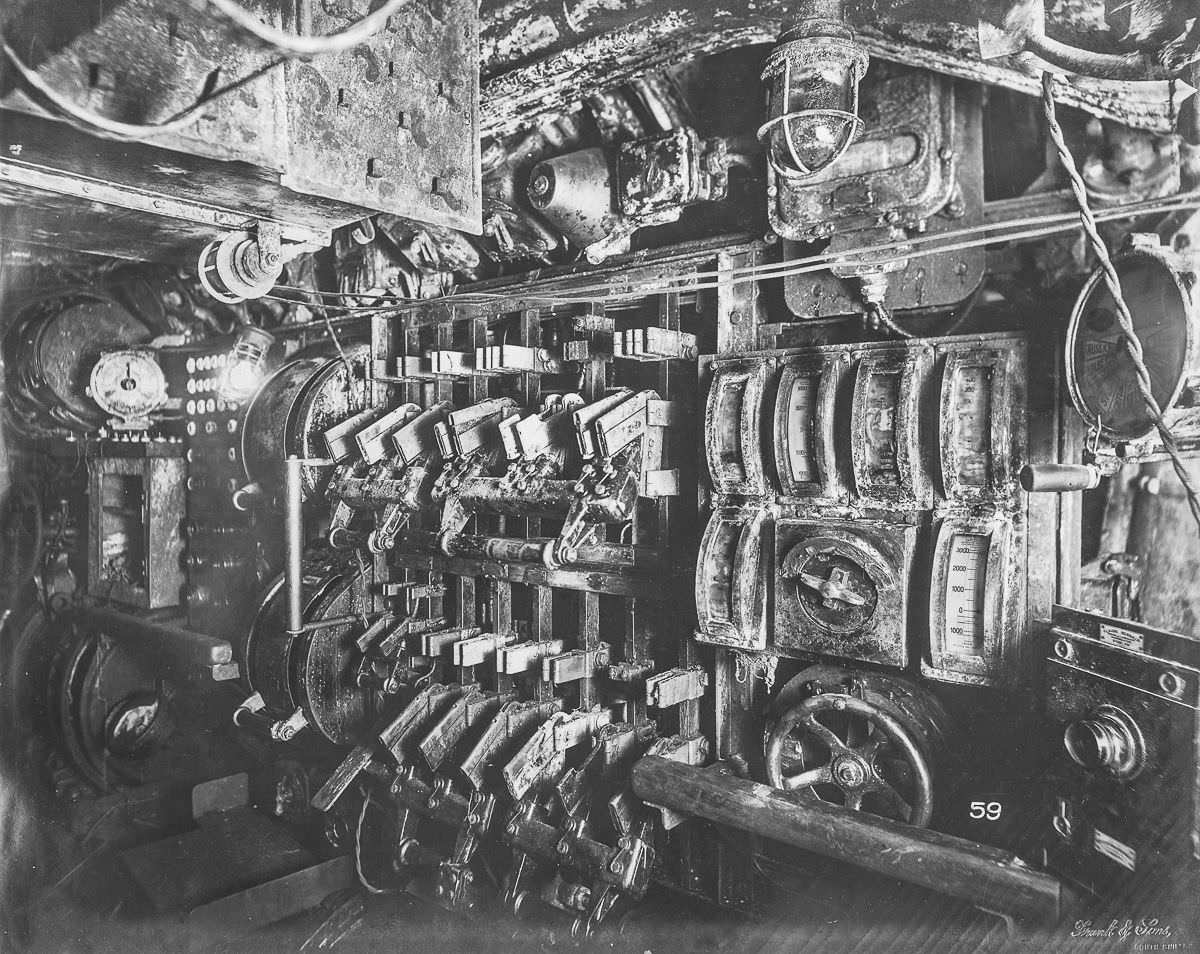
Deep inside a vessel’s working spaces, the electric control room comes into view exactly as the title promises—looking aft to port—where a dense wall of equipment fills the frame. Switchgear, knife-like breakers, and stacked contact assemblies sit beside rounded gauge faces and heavy handwheels, all packed into a cramped compartment of riveted metal and conduit. The grime, scuffs, and worn finishes read like a record of constant use, a reminder that “Inventions” were rarely pristine once they met the demands of real service.
Light appears to spill from utilitarian fixtures while cables and pipes snake overhead, giving the scene a layered, mechanical depth. The instruments suggest careful monitoring of power and distribution, with analog dials designed for quick reading under pressure and in low visibility. It’s an intimate glimpse of early electrical engineering at sea, where reliability mattered more than elegance and every component was built to be serviced, tightened, or replaced by hand.
What lingers is the sense of human presence even in the absence of people: this was a room meant for watchstanders, routines, and rapid decisions. For readers interested in maritime history, industrial technology, and the evolution of shipboard electrics, the photo offers rich detail—hardware as historical evidence. The view aft to port becomes more than a directional note; it frames a working environment where modern control systems were once a tactile craft of levers, contacts, and needle gauges.