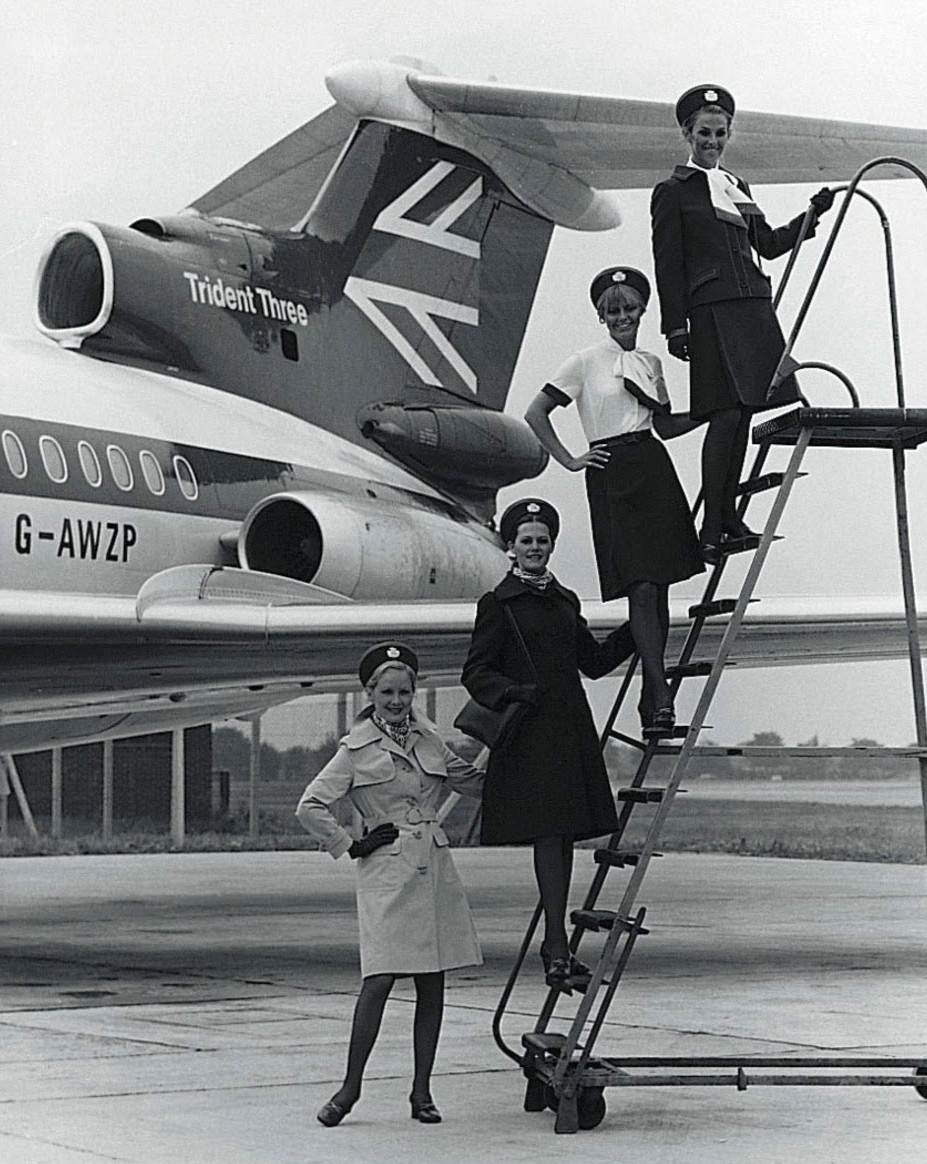
On an airport apron, four BEA cabin crew pose with the easy confidence of a brand that sold modern air travel as style you could wear. Behind them looms a Trident Three jet, its tail marked with the bold Union Flag motif and the aircraft name stencilled on the engine, anchoring the scene firmly in the early-1970s jet age. The arrangement—one figure on the tarmac, others ascending the mobile stairs—turns a routine boarding moment into a fashion tableau.
Sir Hardy Amies’ influence is evident in the crisp lines and disciplined proportions: smart pillbox-style hats, neatly cut jackets, coordinated scarves, and skirts that read as practical yet polished. Contrasting outerwear adds variety within a strict corporate look, with lighter and darker coats suggesting seasonal layers for a working wardrobe. The overall effect is aspirational without being flamboyant, reflecting how airline uniforms became moving advertisements for national design and service standards.
Fashion and aviation culture meet here in a way that’s instantly SEO-friendly for readers searching British European Airways history, 1970s flight attendant uniforms, and Hardy Amies design. More than a record of what staff wore, the photograph captures how airlines curated identity—through silhouettes, accessories, and the carefully managed harmony between crew and aircraft livery. It’s a small window into an era when flying promised not just speed, but a particular kind of British modernity.