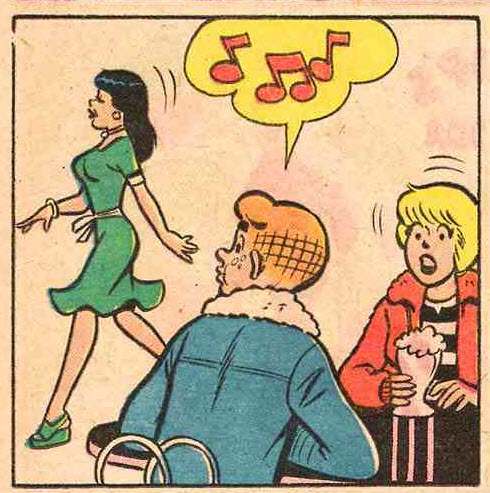
Archie and Jughead sit in a soda-shop booth as a stylish woman in a fitted green dress strolls past, and the whole panel turns into a punchline about distraction. Musical notes float in a speech bubble, a cartoon shorthand for whistling and gawking, while Jughead’s wide-eyed surprise—milkshake in hand—lands the joke with a familiar, teen-comedy snap. The bold colors and clean linework signal classic Archie Comics, but the body language leans into the era’s flirtier, more suggestive humor.
By the 1970s, even “funny” comics were reacting to shifting pop culture, and Archie’s pages often played with a slightly hotter, more knowing kind of innuendo. Rather than explicit content, the heat comes from implication: the exaggerated swivel of a head, the jaunty whistle, the confident walk-by that commands attention. It’s a small scene that reflects broader changes in teen media, where romance and sex appeal crept closer to the surface while staying safely within mainstream boundaries.
Collectors and nostalgia readers will recognize how a single gag like this can double as a time capsule, preserving what advertisers, editors, and audiences considered acceptable flirtation in the period. The soda-shop setting, the exaggerated reactions, and the fashion cues all help date the mood without needing a captioned location or a named character roster. For anyone curious about how Archie Comics evolved, this panel offers an easy entry point into the “lusty pages” side of 1970s humor—cheeky, colorful, and unmistakably of its moment.